AI and the Evolution of Online Economies
AI and the Evolution of Online Economies
AI and the Evolution of Online Economies
How Artificial Intelligence Is Creating the Next Digital Economy
Suggested URL Slugai-and-the-evolution-of-online-economies
Introduction
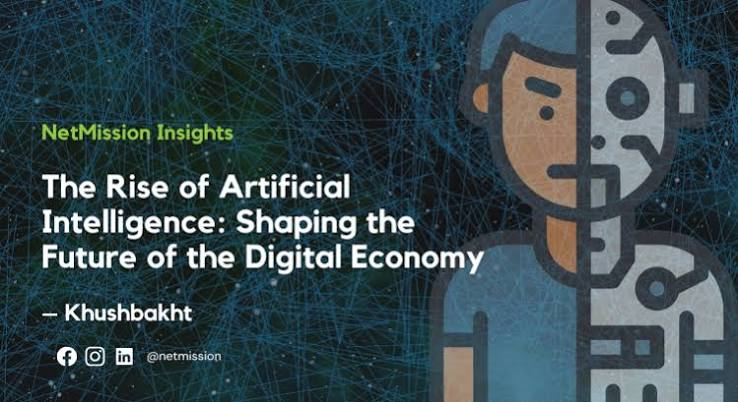
The internet has always been an engine of economic transformation. From the first online marketplaces in the 1990s to today's trillion-pound digital economy, every major technological breakthrough has created entirely new industries, professions, and business models. Artificial Intelligence is now driving the next phase of that evolution.
Unlike previous technological advances, AI is not simply improving existing online businesses—it is redefining how digital economies function. Intelligent systems now create content, automate customer service, optimise marketing campaigns, analyse markets, build software, generate designs, and even make autonomous business decisions.
The result is an online economy where productivity scales faster than ever before. Individuals can launch global businesses with minimal capital, companies can automate operations once requiring entire departments, and digital platforms can deliver highly personalised experiences to billions of users simultaneously.
This article explores how AI is reshaping online economies, the opportunities emerging for entrepreneurs and businesses, the challenges that accompany rapid technological change, and what the future may hold for the intelligent digital marketplace.
The Evolution of the Digital Economy
The internet economy has evolved through several distinct stages.
The first phase focused on information sharing. Static websites provided access to content, but interaction was limited.
The second phase introduced e-commerce and online payments, enabling businesses to sell products and services globally.
The rise of social media transformed attention into a valuable economic asset, giving birth to influencer marketing, digital advertising, and the creator economy.
Cloud computing then enabled businesses to scale rapidly without investing heavily in infrastructure.
Today, Artificial Intelligence is creating the next major shift. Rather than simply connecting buyers and sellers, AI actively participates in creating value by generating knowledge, automating work, improving decision-making, and enhancing customer experiences.
AI as the New Economic Infrastructure
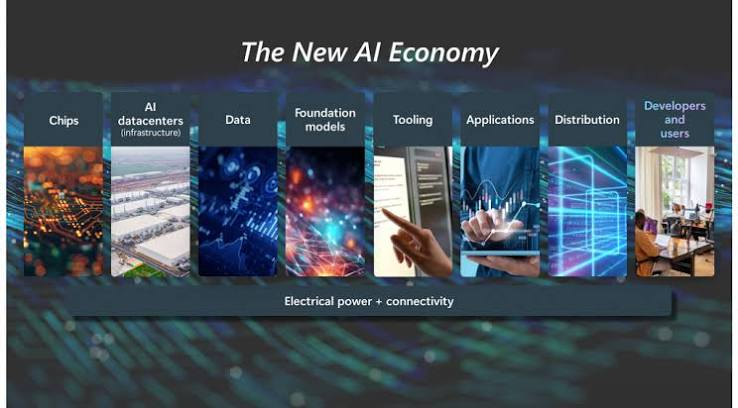
Just as electricity became the foundation of industrial economies, AI is becoming foundational infrastructure for digital economies.
Businesses increasingly integrate AI into:
- Operations
- Marketing
- Finance
- Customer service
- Product development
- Human resources
- Data analysis
- Supply chain management
Instead of functioning as another software tool, AI operates as an intelligent layer across the entire business ecosystem.
Organisations that successfully integrate AI gain significant advantages in speed, efficiency, and scalability.
The Rise of AI-Powered Entrepreneurs
One of AI's most profound impacts is reducing barriers to entrepreneurship.
A decade ago, launching an online business often required specialists in web development, graphic design, copywriting, search engine optimisation, advertising, customer support, and accounting.
Today, AI enables a single entrepreneur to perform many of these functions with remarkable efficiency.
AI assists with:
- Business planning
- Website creation
- Brand identity
- Content production
- Market research
- Product descriptions
- Email marketing
- Advertising
- Financial forecasting
- Customer support
This democratisation allows talented individuals to compete with much larger organisations.
Intelligent Automation Creates New Business Models
Automation has existed for years, but AI introduces intelligent automation capable of adapting to changing conditions.
Businesses now automate:
- Lead generation
- Customer onboarding
- Order fulfilment
- Inventory management
- Pricing optimisation
- Appointment scheduling
- Technical support
- Financial reporting
Rather than eliminating human involvement entirely, intelligent automation allows teams to concentrate on strategic activities while AI manages repetitive operations.
The Creator Economy Becomes an AI Economy
Content creators represent one of the fastest-growing sectors of online economies.
Artificial Intelligence dramatically expands creator capabilities by assisting with:
- Long-form articles
- Newsletters
- Podcasts
- Video production
- Graphic design
- Social media scheduling
- SEO optimisation
- Audience analytics
- Translation
- Content repurposing
Independent creators can now build global media businesses without employing large production teams.
This lowers costs while increasing creative output.
AI Is Reshaping Digital Commerce
Online shopping continues evolving beyond traditional e-commerce.
AI enables highly personalised shopping experiences by analysing customer preferences, browsing history, purchasing behaviour, and market trends.
Retailers increasingly deploy AI for:
- Dynamic pricing
- Product recommendations
- Demand forecasting
- Fraud prevention
- Inventory optimisation
- Personalised promotions
Consumers receive better recommendations, while businesses improve conversion rates and operational efficiency.
Intelligent Marketplaces
Digital marketplaces increasingly use AI to match buyers with sellers more effectively.
Algorithms analyse:
- Consumer behaviour
- Product quality
- Seller reputation
- Market demand
- Pricing trends
- Geographic factors
This creates more efficient markets where participants receive highly relevant recommendations.
As AI improves, marketplaces become increasingly autonomous, continuously optimising themselves without extensive human intervention.
AI and the Future of Digital Labour
The digital workforce is changing rapidly.
Many professionals now collaborate directly with AI systems rather than working independently.
Emerging roles include:
- AI consultants
- Prompt engineers
- Automation architects
- AI trainers
- AI governance specialists
- Human-AI workflow designers
Rather than replacing skilled professionals, AI increasingly augments their capabilities.
Workers who learn to collaborate effectively with intelligent systems will remain highly valuable.
AI Agents and Autonomous Businesses
One of the most exciting developments is the emergence of AI agents.
Unlike traditional software, AI agents can:
- Make decisions
- Complete multi-step tasks
- Monitor markets
- Negotiate transactions
- Coordinate workflows
- Learn from previous interactions
Future businesses may rely on networks of specialised AI agents managing marketing, logistics, customer service, finance, and operations simultaneously.
Entrepreneurs will increasingly supervise AI systems rather than perform every operational task manually.
The Expansion of Subscription Economies
AI enables businesses to deliver continuous value through personalised subscription models.
Examples include:
- AI coaching
- Personal finance assistants
- Health monitoring
- Educational platforms
- Productivity systems
- Creative tools
- Business analytics
Because AI continuously learns from user behaviour, subscription services become more valuable over time, strengthening customer retention and recurring revenue.
Data Becomes the New Competitive Advantage
In AI-driven economies, high-quality data becomes a strategic asset.
Organisations collect information from:
- Customer interactions
- Sales transactions
- Website behaviour
- Social media
- Supply chains
- Operational processes
AI transforms raw data into actionable intelligence, enabling faster and more informed decisions.
Companies that manage data responsibly while respecting privacy regulations will gain sustainable competitive advantages.
AI Is Changing Digital Marketing
Marketing increasingly relies on AI for precision and efficiency.
Modern AI systems assist with:
- Audience segmentation
- Predictive analytics
- Search engine optimisation
- Email personalisation
- Advertising optimisation
- Social media management
- Content generation
- Customer journey analysis
Campaigns become increasingly adaptive, responding automatically to consumer behaviour in real time.
Financial Technology Evolves with AI
FinTech platforms integrate AI across virtually every service.
Applications include:
- Fraud detection
- Credit assessment
- Investment analysis
- Risk management
- Compliance monitoring
- Customer support
- Budget planning
Consumers benefit from faster, more personalised financial services while institutions reduce operational costs.
Education Fuels the New Economy
Continuous learning becomes essential in AI-driven economies.
Educational platforms increasingly provide:
- Personalised learning
- Adaptive assessments
- AI tutoring
- Career guidance
- Professional certifications
- Skill recommendations
Workers no longer learn once for an entire career.
Instead, lifelong education becomes a normal part of professional success.
Cybersecurity in AI Economies
Greater automation increases the importance of digital security.
AI strengthens cybersecurity by:
- Detecting anomalies
- Monitoring networks
- Predicting attacks
- Identifying fraud
- Responding automatically
However, cybercriminals also increasingly exploit AI.
Businesses must therefore invest in responsible AI governance alongside technological innovation.
Ethical Considerations
The rapid expansion of AI-powered economies raises important questions.
Governments, businesses, and technology developers must address:
- Privacy
- Transparency
- Bias
- Copyright
- Employment transitions
- Competition
- Data ownership
- Accountability
Building public trust will be essential for sustainable AI adoption.
Opportunities for Businesses
Organisations that embrace AI today position themselves for long-term growth.
Key priorities include:
- Building AI literacy
- Investing in automation
- Modernising digital infrastructure
- Improving cybersecurity
- Developing ethical AI policies
- Experimenting with intelligent workflows
- Upskilling employees
Competitive advantage increasingly depends on how effectively businesses integrate AI across their operations.
Preparing for the Future
The evolution of online economies is only beginning.
Future developments may include:
- Autonomous digital companies
- Fully personalised online experiences
- AI-managed investment portfolios
- Intelligent supply chains
- Autonomous marketplaces
- Human-AI collaborative organisations
- Global AI commerce platforms
The pace of innovation suggests that the digital economy of 2035 may look dramatically different from today's internet.
Businesses that begin adapting now will be far better positioned to thrive.
Conclusion
Artificial Intelligence is reshaping online economies at every level, from entrepreneurship and digital commerce to finance, education, marketing, and global business operations. It is reducing barriers to entry, enabling individuals to build scalable businesses, helping organisations operate with greater intelligence, and creating entirely new economic models powered by automation and data.
The next generation of successful companies will not simply use AI as a productivity tool—they will build AI into the core of their business strategy. Likewise, entrepreneurs who embrace intelligent automation, continuous learning, and ethical innovation will be well placed to capitalise on the opportunities of this new era.
The evolution of online economies is no longer a future prediction; it is already underway. As AI continues to mature, it will redefine how value is created, exchanged, and sustained across the digital world. Those who adapt early will help shape—and benefit from—the next great chapter of the internet economy.
Further Reading
If you enjoyed this article, consider exploring more insights into artificial intelligence, digital transformation, automation, entrepreneurship, and the future of online business on my other platforms:
Medium: https://medium.com/@sam_ne4
Substack: https://substack.com/@mrscallimi
Each platform offers in-depth analysis, practical AI strategies, business frameworks, and emerging technology trends designed to help entrepreneurs, creators, and professionals succeed in the AI-driven economy.