How Artificial Intelligence Is Redefining the Way We Work, Learn, Create, and Build the Future
Discover how AI is transforming productivity across business, education, creativity, and everyday life. Learn the tools, strategies, and future trends shaping the AI era
The AI Revolution Has Changed Productivity Forever
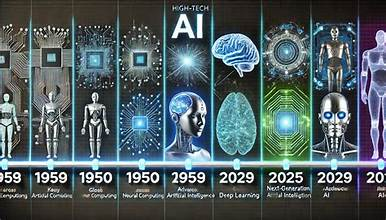
Human productivity has undergone several revolutionary transformations throughout history. The agricultural revolution enabled societies to produce more food with fewer workers. The Industrial Revolution introduced machines that multiplied manufacturing output. The digital revolution connected billions of people through computers and the internet.
Today, humanity is experiencing another historic transformation: the Artificial Intelligence Revolution.
Unlike previous technological shifts that primarily enhanced physical labor or communication, AI is fundamentally augmenting human intelligence itself. It helps individuals think faster, analyze more information, automate repetitive tasks, generate creative ideas, and make better-informed decisions.
The result is not merely increased efficiency—it is a complete redefinition of what individuals and organizations can accomplish in less time.
Businesses are adopting AI-powered systems to streamline operations. Students use AI to accelerate learning. Researchers process massive datasets in minutes. Entrepreneurs launch products faster than ever before. Writers create high-quality content more efficiently, while developers generate code with intelligent assistance.
The AI era is no longer approaching—it is already here.
From Manual Work to Intelligent Collaboration
For centuries, productivity depended almost entirely on human effort.
Workers performed calculations manually.
Designers created every concept from scratch.
Marketers analyzed reports by hand.
Business owners managed operations using spreadsheets and paperwork.
Every task demanded significant time and energy.
Artificial intelligence introduces a fundamentally different approach.
Rather than replacing human expertise, AI increasingly serves as an intelligent collaborator capable of assisting with research, drafting, analysis, forecasting, automation, and optimization.
Professionals no longer begin every project with a blank page. Instead, they start with AI-generated suggestions that can be refined, customized, and improved.
This collaborative model enables individuals to focus on strategic thinking, creativity, innovation, and complex decision-making instead of repetitive execution.
The Four Generations of Productivity
Understanding today's transformation becomes easier when viewed through the broader history of productivity.
Generation One: Physical Labor
The earliest economies relied almost exclusively on manual effort.
Agriculture, construction, transportation, and manufacturing depended on human strength.
Output was limited by physical capacity.
Growth required more workers.
Generation Two: Mechanical Productivity
The Industrial Revolution introduced machinery capable of performing repetitive physical tasks more efficiently.
Factories dramatically increased production.
Costs declined.
Living standards improved.
Machines amplified physical work.
Generation Three: Digital Productivity
Computers fundamentally changed knowledge work.
Spreadsheets replaced paper accounting.
Email transformed communication.
Databases simplified record keeping.
The internet democratized information.
Digital technologies amplified information processing.
Generation Four: Intelligent Productivity
Artificial Intelligence now assists with cognitive tasks.
Examples include:
- Writing
- Coding
- Data analysis
- Language translation
- Customer support
- Image generation
- Video creation
- Decision support
- Workflow automation
- Strategic planning
Instead of simply storing information, AI actively helps process and interpret it.
This represents the beginning of intelligent productivity.
Why AI Makes Humans More Productive
One of the greatest misconceptions about AI is that it simply replaces jobs.
In reality, AI often enhances human capabilities.
Consider a marketing manager responsible for launching a new campaign.
Without AI, the process might involve:
- Brainstorming ideas
- Writing copy
- Researching competitors
- Designing visuals
- Editing images
- Scheduling content
- Analyzing performance
- Preparing reports
Each task requires time and specialized skills.
With AI assistance:
- Initial ideas are generated instantly.
- Draft copy is produced in seconds.
- Competitor summaries are automated.
- Images are created quickly.
- Data analysis is accelerated.
- Reports are generated automatically.
The manager still provides strategy, judgment, creativity, and final approval, but AI removes much of the repetitive workload.
This enables professionals to concentrate on higher-value activities.
Productivity Is No Longer About Working Harder
For decades, productivity advice emphasized:
- Longer hours
- More meetings
- More emails
- More multitasking
Research increasingly shows that excessive workload often reduces performance.
Artificial intelligence shifts the focus toward smarter work.
Instead of maximizing effort, AI helps maximize outcomes.
Examples include:
- Automating repetitive processes
- Summarizing lengthy documents
- Organizing information
- Drafting communications
- Identifying patterns in large datasets
- Recommending next steps
Professionals achieve more while reducing unnecessary manual effort.
AI Across Every Industry
Artificial intelligence is no longer confined to technology companies.
Nearly every industry is adopting AI solutions.
Healthcare
Doctors use AI to:
- Analyze medical images
- Assist diagnosis
- Predict disease progression
- Automate documentation
- Improve treatment planning
Healthcare professionals spend more time with patients and less time on administrative work.
Education
Teachers increasingly use AI for:
- Lesson planning
- Personalized learning
- Quiz generation
- Student feedback
- Content creation
- Translation
Students receive more individualized educational experiences.
Finance
Financial institutions apply AI to:
- Fraud detection
- Credit risk analysis
- Market forecasting
- Investment research
- Customer service
Decision-making becomes faster and more data-driven.
Manufacturing
Factories integrate AI into:
- Predictive maintenance
- Inventory management
- Quality inspection
- Robotics
- Supply chain optimization
Operational efficiency improves significantly.
Marketing
Marketing teams rely on AI for:
- SEO optimization
- Content generation
- Customer segmentation
- Advertising optimization
- Email personalization
- Analytics
Campaigns become increasingly targeted and measurable.
The Rise of AI-Augmented Creativity
Creativity has traditionally been viewed as uniquely human.
AI challenges this assumption—not by replacing creativity, but by accelerating it.
Today's creative professionals use AI to:
- Generate concepts
- Develop outlines
- Create illustrations
- Produce music
- Edit videos
- Design presentations
- Brainstorm headlines
- Improve storytelling
The creative process becomes faster while preserving human originality.
Instead of eliminating imagination, AI expands creative possibilities.
Time: The Most Valuable Resource
Everyone has access to the same twenty-four hours each day.
The difference lies in how effectively that time is used.
AI excels at reclaiming time.
Tasks that once required:
- Three hours
- Five hours
- Entire workdays
can often be completed in minutes with intelligent automation.
The saved time can then be invested in:
- Innovation
- Learning
- Strategic planning
- Relationship building
- Business development
- Personal growth
This shift represents one of AI's greatest contributions to modern productivity.
The Productivity Mindset of the Future
The most successful professionals of the coming decade are unlikely to be those who simply work the longest hours.
Instead, they will be those who effectively combine:
- Human creativity
- Critical thinking
- Emotional intelligence
- Strategic decision-making
- Artificial intelligence
AI becomes a productivity multiplier rather than a replacement for expertise.
Individuals who continuously learn how to collaborate with intelligent systems will likely outperform those relying solely on traditional workflows.
AI-Powered Workflow Automation
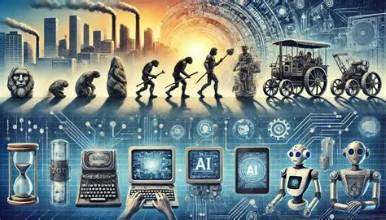
Automation is one of AI's greatest strengths.
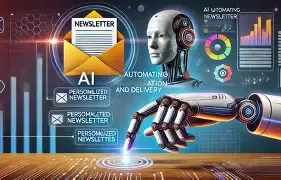
Modern businesses automate workflows such as:
- Customer onboarding
- Invoice processing
- Email responses
- Inventory updates
- Appointment scheduling
- CRM management
- Lead qualification
- Reporting
These automations reduce repetitive work while improving consistency.
Example: Marketing Workflow
Without AI:
- Research keywords
- Write article
- Create images
- Design social posts
- Schedule publication
- Monitor analytics
- Prepare reports
With AI:
- Keyword suggestions are generated automatically.
- Draft articles are created in minutes.
- Images are produced with AI tools.
- Social captions are generated.
- Reports update automatically.
The marketing team focuses on strategy instead of repetitive execution.
AI for Entrepreneurs
Entrepreneurs often wear multiple hats:
- CEO
- Salesperson
- Marketer
- Customer support
- Accountant
- Product manager
AI reduces this burden.
Entrepreneurs use AI to:
- Draft business plans
- Research competitors
- Create branding materials
- Build websites
- Generate sales copy
- Respond to customer inquiries
- Analyze financial data
This allows small businesses to compete more effectively with larger organizations.
AI and Learning
Learning has become increasingly personalized thanks to AI.
Instead of following identical educational paths, learners receive customized experiences.
AI can:
- Explain difficult concepts
- Generate quizzes
- Recommend resources
- Translate languages
- Adapt explanations to different skill levels
Students learn at their own pace while educators focus on mentorship and critical thinking.
Ethical Productivity
As AI becomes more powerful, ethical use becomes increasingly important.
Organizations should establish clear guidelines regarding:
- Transparency
- Privacy
- Copyright
- Data security
- Responsible AI use
- Human oversight
Ethical AI builds trust among employees, customers, and partners.
The Skills That Matter Most
The AI era changes which skills are most valuable.
Rather than memorizing information, professionals increasingly benefit from developing:
Critical Thinking
Evaluating AI-generated information carefully.
Creativity
Producing original ideas that AI can help refine.
Communication
Working effectively with both humans and AI systems.
Problem Solving
Designing workflows and solutions instead of completing repetitive tasks.
Adaptability
Learning new tools as technology evolves.
AI Literacy
Understanding AI capabilities, limitations, and best practices.
These skills complement AI rather than competing with it.
Common Productivity Mistakes
Despite AI's advantages, many users fail to achieve meaningful productivity gains.
Common mistakes include:
Using AI Without Clear Goals
AI performs best when given specific objectives.
Blindly Trusting AI
Generated content should always be verified.
Automating Poor Processes
Automation improves existing workflows but cannot fix fundamentally inefficient systems.
Ignoring Data Quality
Poor input often leads to poor output.
Resisting Continuous Learning
AI evolves rapidly, making ongoing education essential.
The Future Workplace
Over the next decade, workplaces will likely continue integrating AI into everyday operations.
Expected developments include:
Intelligent Personal Assistants
AI will manage schedules, communications, research, and administrative work.
Predictive Decision Support
Business leaders will receive recommendations based on real-time data analysis.
Human-AI Teams
Employees and AI systems will collaborate seamlessly across departments.
Autonomous Business Processes
Routine operational tasks will increasingly run with minimal human intervention.
Personalized Work Environments
AI will adapt software interfaces and workflows to individual preferences and work styles.
AI Beyond the Office
Productivity improvements extend into everyday life.
Individuals increasingly use AI for:
- Meal planning
- Fitness tracking
- Financial budgeting
- Travel planning
- Language learning
- Home organization
- Personal writing
- Creative hobbies
AI supports better time management both professionally and personally.
Preparing for the AI Economy
Organizations that succeed in the AI era often follow a structured approach.
Step 1: Identify Repetitive Tasks
Determine which activities consume the most time.
Step 2: Evaluate AI Opportunities
Assess where AI can improve efficiency or quality.
Step 3: Start Small
Pilot AI in one department before expanding.
Step 4: Train Employees
Provide practical education on AI tools and responsible usage.
Step 5: Measure Results
Track:
- Time saved
- Cost reductions
- Productivity improvements
- Employee satisfaction
- Customer outcomes
Continuous measurement supports ongoing optimization.
AI Is an Opportunity, Not a Threat
Throughout history, new technologies have changed the nature of work.
The printing press transformed education.
Electricity transformed manufacturing.
Computers transformed offices.
The internet transformed communication.
Artificial intelligence is transforming knowledge work.
Rather than eliminating human value, AI shifts attention toward uniquely human strengths:
- Judgment
- Leadership
- Innovation
- Empathy
- Creativity
- Strategic thinking
The future belongs to those who learn how to collaborate effectively with intelligent systems.
Final Thoughts
The evolution of human productivity in the AI era is about more than working faster. It is about redefining how individuals and organizations create value. AI enables professionals to automate routine tasks, analyze information at unprecedented speed, and generate ideas more efficiently than ever before. However, the greatest competitive advantage still comes from combining AI's computational power with human creativity, ethics, experience, and critical thinking.
As AI continues to evolve, productivity will increasingly depend on designing intelligent workflows rather than simply increasing effort. Businesses that embrace responsible AI adoption, invest in employee education, and continuously refine their processes will be better positioned for long-term success. Likewise, individuals who develop AI literacy alongside timeless human skills will remain adaptable in an ever-changing workplace.
The AI era is not the end of human productivity—it is the beginning of a new chapter where people and intelligent technology work together to achieve outcomes that neither could accomplish alone.
Frequently Asked Questions (FAQ)
What is AI productivity?
AI productivity refers to using artificial intelligence to automate tasks, improve decision-making, generate content, analyze data, and streamline workflows, enabling people and businesses to achieve more in less time.
Will AI replace human workers?
AI is more likely to transform jobs than eliminate them entirely. Many roles will evolve, with humans focusing on creativity, strategic thinking, and relationship-building while AI handles repetitive or data-intensive tasks.
Which industries benefit most from AI productivity?
Healthcare, finance, education, manufacturing, marketing, software development, retail, logistics, legal services, and customer support are among the sectors seeing significant productivity gains through AI.
What skills are essential in the AI era?
Critical thinking, adaptability, creativity, communication, AI literacy, ethical decision-making, and problem-solving are increasingly valuable as AI becomes part of everyday work.
Want More In-Depth AI, Technology, and Future Innovation Insights?
If you enjoyed this article and would like access to more exclusive content covering artificial intelligence, psychology, technology, digital transformation, business innovation, entrepreneurship, data science, and the future of work, join my communities on the platforms below. I regularly publish premium articles, expert analysis, research, practical guides, and exclusive content designed to help readers stay ahead in the rapidly evolving world of AI and emerging technologies.
⭐ Become a Patreon Member
Support independent research and gain access to exclusive articles, early releases, premium content, behind-the-scenes updates, and future AI reports.
👉 Patreon:
https://patreon.com/GlobalAIIntelligence2026?utm_medium=unknown&utm_source=join_link&utm_campaign=creatorshare_creator&utm_content=copyLink
📩 Subscribe on Substack
Receive exclusive newsletters, premium long-form articles, industry insights, AI trends, and subscriber-only content delivered directly to your inbox. 👉 Substack:
https://substack.com/@mrscallimi
⭐ Become a Substack Member
Support independent research and gain access to exclusive articles, early releases, premium content, behind-the-scenes updates, and future AI reports. 👉 Substack :
https://substack.com/@mrscallimi
Stay Ahead of the AI Revolution
The world is changing faster than ever. By joining these communities, you'll gain valuable insights into:
- 🤖 Artificial Intelligence
- 🧠 Psychology and Human Behavior
- 📊 Data Science & Analytics
- 💼 Business & Entrepreneurship
- 💻 Digital Transformation
- 🚀 Emerging Technologies
- 📈 Future Careers & Skills
- 🔬 AI Research & Innovation
- 🌍 Global Technology Trends
Thank you for reading and for supporting independent research. Together, we can better understand the technologies shaping our future.