AI and the Future of Human Creativity
How Artificial Intelligence Is Transforming Innovation, Art, Business, and Human Imagination Without Replacing the Creative Mind
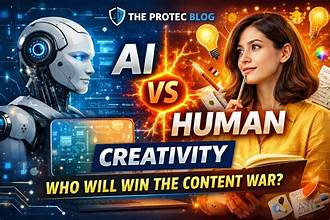
Artificial Intelligence has rapidly evolved from a specialized technology used primarily by researchers into one of the most influential forces shaping modern society. Today, AI assists with everything from customer service and scientific research to software development, healthcare, finance, education, and entertainment. Among its most fascinating and sometimes controversial applications is its growing role in human creativity.
For centuries, creativity has been considered one of humanity's defining characteristics. Whether expressed through painting, music, literature, architecture, filmmaking, or business innovation, creativity has always represented the ability to imagine something new and transform ideas into reality. Unlike repetitive tasks that follow predictable rules, creative thinking depends on imagination, curiosity, emotional intelligence, experimentation, and experience.
The emergence of generative AI has sparked an important global discussion: Can machines truly be creative? Or are they simply sophisticated tools that help humans create more efficiently?
The answer is more nuanced than either extreme suggests. Artificial Intelligence is not replacing human creativity. Instead, it is changing how creative work begins, develops, and reaches audiences. AI can generate ideas, suggest improvements, automate repetitive production tasks, and accelerate experimentation, but human judgment remains essential for originality, storytelling, ethics, emotional depth, and cultural understanding.
Businesses, artists, entrepreneurs, educators, and content creators are discovering that AI works best as a collaborative partner rather than an independent creator. Those who learn to combine technological capabilities with uniquely human imagination are likely to shape the future of innovation.
This article explores how Artificial Intelligence is transforming creativity across industries, the opportunities it creates, the challenges it introduces, and why the future belongs to people who know how to work alongside intelligent technologies rather than compete against them.
Understanding Human Creativity
Before examining AI's impact, it is important to understand what creativity actually means.
Creativity is often misunderstood as artistic talent alone. In reality, creativity extends far beyond painting, writing, or music. It is the ability to generate original ideas, solve unfamiliar problems, recognize unexpected connections, and imagine possibilities that did not previously exist.
Creative thinking appears in nearly every profession:
- Entrepreneurs designing innovative business models
- Engineers developing breakthrough technologies
- Scientists discovering new medicines
- Teachers creating engaging learning experiences
- Architects designing sustainable cities
- Software developers solving complex programming challenges
- Marketing professionals building memorable campaigns
- Healthcare specialists improving patient care
Creativity combines knowledge with imagination. It often emerges through curiosity, experimentation, observation, collaboration, and learning from failure.
Human creativity is influenced by emotions, culture, personal experiences, relationships, values, intuition, and empathy—qualities that remain difficult for machines to genuinely possess.
While AI can recognize patterns across enormous datasets, humans assign meaning to those patterns.
This distinction remains one of the most important differences between artificial intelligence and human intelligence.
Why AI Is Transforming Creative Work
Artificial Intelligence has become exceptionally good at identifying patterns within vast amounts of information.
Instead of starting every project from a blank page, professionals can now ask AI systems to generate initial ideas, draft outlines, summarize research, create design concepts, produce code, suggest marketing campaigns, or visualize new products within seconds.
This dramatically changes creative workflows.
Previously, much creative work involved repetitive preparation:
- Researching information
- Organizing notes
- Brainstorming ideas
- Producing first drafts
- Editing repetitive sections
- Creating multiple variations
AI now accelerates many of these early stages.
Rather than replacing creative professionals, it reduces time spent on routine production, allowing more attention to strategy, originality, and refinement.
For businesses, this means:
- Faster product development
- More rapid marketing campaigns
- Increased experimentation
- Lower production costs
- Improved collaboration
- Greater innovation capacity
For individuals, AI can reduce creative barriers that previously discouraged people from exploring new ideas.
Someone without advanced graphic design skills can produce visual concepts.
A beginner writer can organize ideas more effectively.
An entrepreneur can rapidly prototype product descriptions, business plans, presentations, and advertising materials.
Creativity becomes more accessible—not because AI creates genius, but because it removes many technical obstacles.
AI as a Creative Partner Rather Than a Replacement
One of the biggest misconceptions surrounding Artificial Intelligence is the belief that AI will completely replace creative professionals.
History suggests otherwise.
When photography emerged, many predicted the end of painting.
Instead, painting evolved.
When computers became common, some feared the disappearance of graphic design.
Instead, digital creativity expanded dramatically.
When digital cameras replaced film, professional photography did not disappear.
It transformed.
Artificial Intelligence represents another technological shift rather than an ending.
Creative professionals increasingly use AI similarly to how they use cameras, editing software, design applications, or professional research tools.
The value no longer comes from simply producing content.
It comes from producing meaningful content.
AI can generate hundreds of ideas.
Humans decide which ones matter.
AI can produce multiple visual styles.
Humans choose the one that communicates emotion.
AI can suggest headlines.
Humans understand audience psychology.
AI can create images.
Humans create stories.
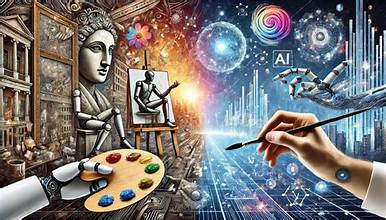
This partnership between human judgment and machine efficiency is becoming the defining characteristic of modern creative work.
AI and the Future of Writing
Writing has become one of the industries most visibly transformed by Artificial Intelligence.
Modern AI writing assistants can help generate:
- Blog articles
- Marketing copy
- Product descriptions
- News summaries
- Business reports
- Technical documentation
- Social media content
- Educational materials
- Email campaigns
- Video scripts
This increased productivity has led many organizations to produce significantly more content than ever before.
However, quantity does not automatically create quality.
Readers still value authenticity, expertise, credibility, and unique perspectives.
An AI-generated article lacking original insights rarely builds lasting trust.
Successful writers increasingly use AI to:
- Generate ideas
- Overcome writer's block
- Structure outlines
- Improve grammar
- Refine readability
- Explore alternative viewpoints
- Speed up editing
The writer remains responsible for research accuracy, storytelling, fact-checking, emotional tone, originality, and strategic messaging.
In many ways, AI functions like an intelligent editor sitting beside the writer rather than replacing the author entirely.
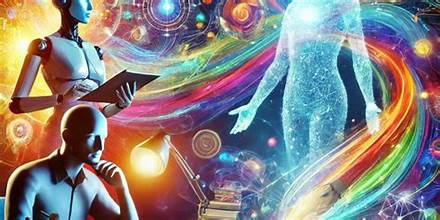
AI Is Expanding Visual Design
Graphic design has also experienced remarkable transformation through Artificial Intelligence.
Designers can now rapidly create:
- Marketing graphics
- Website layouts
- Brand concepts
- Product mockups
- Advertising visuals
- Social media assets
- Illustrations
- Presentation graphics
- Infographics
- Packaging concepts
Instead of spending hours creating multiple initial concepts, designers can generate numerous starting points within minutes.
This allows more time for refinement, brand consistency, user experience, and creative experimentation.
Businesses particularly benefit because creative production cycles become significantly shorter.
Marketing departments can quickly test multiple campaign variations before selecting the strongest concepts.
Startups with limited budgets gain access to professional-quality visual assets that previously required much larger design teams.
Despite these advances, successful visual communication still depends on human understanding of audience behavior, cultural sensitivity, branding strategy, accessibility, and emotional impact.
Technology generates possibilities.
Designers create experiences.
AI and the Evolution of Music
Music has always reflected human emotion, culture, and personal expression.
Artificial Intelligence is now entering this field in fascinating ways.
AI systems can assist musicians by:
- Generating melodies
- Suggesting harmonies
- Producing background music
- Creating orchestral arrangements
- Enhancing audio quality
- Mixing recordings
- Removing unwanted noise
- Assisting composition
Independent musicians benefit because production costs have fallen dramatically.
Someone working from a home studio can produce professional-quality recordings using AI-assisted software that once required expensive recording facilities.
Yet audiences continue to connect most deeply with songs that express authentic human experiences.
People rarely remember music simply because it follows perfect musical patterns.
They remember songs because those songs reflect love, hope, struggle, joy, grief, ambition, or resilience.
Artificial Intelligence may assist composition, but emotional storytelling remains fundamentally human.
AI and the Future of Human Creativity (Part 2)
AI Is Transforming Business Innovation
Creativity is not limited to artists, writers, or musicians. Every successful business depends on creative thinking to solve problems, identify new opportunities, improve customer experiences, and remain competitive in rapidly changing markets.
Artificial Intelligence is becoming one of the most valuable tools for business innovation because it enables organizations to analyze enormous amounts of information faster than any human team could manage alone.
Business leaders now use AI to help:
- Identify market trends
- Analyze customer feedback
- Predict consumer behavior
- Improve product development
- Design marketing campaigns
- Optimize pricing strategies
- Generate business reports
- Automate repetitive workflows
- Improve decision-making
- Discover operational efficiencies
Rather than replacing executives or entrepreneurs, AI provides better information for making strategic decisions.
For example, an e-commerce company can analyze thousands of customer reviews to identify common complaints and opportunities for product improvement. A marketing team can generate dozens of advertising concepts, test different messages, and identify which campaigns are likely to perform best before investing significant budgets.
Innovation becomes faster because teams spend less time collecting information and more time evaluating possibilities.
Organizations that successfully combine human leadership with AI-powered analysis are often able to respond more quickly to changing customer expectations while maintaining high standards of creativity and quality.
The Human Skills That AI Cannot Replace
As Artificial Intelligence becomes more capable, many people wonder which human skills will remain valuable.
The answer is encouraging.
Although AI can automate many routine tasks, it still lacks several qualities that define exceptional human creativity.
These include:
Emotional Intelligence
People understand emotions through personal experience, empathy, relationships, and cultural context.
While AI can imitate emotional language, it does not genuinely experience joy, loss, excitement, fear, or compassion.
Creative work that resonates deeply with audiences usually reflects authentic human emotion.
Ethical Judgment
Businesses constantly face decisions involving fairness, privacy, transparency, and responsibility.
Artificial Intelligence can provide information but cannot independently determine what is morally appropriate in complex human situations.
Ethical leadership remains a human responsibility.
Original Vision
AI generates content by identifying patterns from existing information.
Humans create entirely new movements, philosophies, artistic styles, and business models because they imagine possibilities beyond historical data.
Breakthrough innovation often begins where historical patterns no longer apply.
Cultural Understanding
Creative communication depends heavily on language, traditions, humor, symbolism, history, and local customs.
Humans naturally recognize subtle cultural differences that machines often misunderstand.
This understanding is especially important for global businesses communicating with diverse audiences.
Leadership
Inspiring teams, resolving conflicts, building trust, negotiating partnerships, and motivating people require interpersonal abilities that extend beyond data analysis.
Leadership combines communication, confidence, accountability, empathy, and long-term vision.
These qualities remain uniquely human.
Ethical Challenges of AI-Generated Creativity
As AI becomes increasingly involved in creative industries, important ethical questions continue to emerge.
One major concern involves ownership.
If an AI system generates an image, article, song, or design, who owns the result?
The developer?
The user?
The organization providing the software?
Copyright laws around the world are still evolving to address these questions.
Another concern involves transparency.
Should businesses disclose when AI has helped create marketing content, artwork, or customer communications?
Many consumers appreciate openness about how technology is being used.
There are also concerns about misinformation.
Generative AI can produce convincing text, images, audio, and videos that appear authentic but may contain inaccurate or fabricated information.
This increases the importance of fact-checking, responsible publishing, and media literacy.
Bias is another challenge.
AI systems learn from existing data, which may contain historical biases or incomplete perspectives.
Without careful oversight, AI-generated content can unintentionally reinforce stereotypes or produce unfair outcomes.
Responsible organizations recognize that AI should support human judgment—not replace it.
The Future of Creative Careers
Rather than eliminating creative careers, Artificial Intelligence is reshaping them.
Many traditional roles are evolving into positions that combine technical knowledge with strategic thinking.
Future professionals may increasingly specialize in areas such as:
- AI-assisted content strategy
- Prompt engineering
- Creative direction
- AI workflow design
- Brand storytelling
- Digital product development
- Human-centered design
- AI ethics consulting
- Multimedia production
- Innovation management
Employers are placing greater value on individuals who understand both technology and human communication.
Instead of asking whether AI will replace creative professionals, a more useful question is:
How can creative professionals use AI more effectively than their competitors?
Those who continuously learn new tools while strengthening uniquely human abilities will likely enjoy significant advantages throughout their careers.
How Individuals Can Thrive in an AI-Powered Creative World
Artificial Intelligence should be viewed as a skill multiplier rather than a replacement for talent.
Individuals can prepare for the future by developing complementary abilities.
Continue Learning
Technology evolves rapidly.
Regular learning helps professionals adapt to new AI platforms, creative workflows, and emerging opportunities.
Continuous education is becoming one of the most valuable career investments.
Master Communication
Clear writing, persuasive speaking, storytelling, negotiation, and collaboration remain essential across every industry.
These skills become even more valuable as AI handles more technical tasks.
Develop Critical Thinking
Do not accept AI-generated information without evaluation.
Question assumptions.
Verify facts.
Compare multiple perspectives.
Strong critical thinking improves both creativity and decision-making.
Build Domain Expertise
People with deep expertise in medicine, finance, engineering, education, law, manufacturing, or other specialized industries will continue to create higher-value work because they understand context that AI alone cannot fully interpret.
Knowledge remains one of the strongest competitive advantages.
Experiment Frequently
AI rewards experimentation.
Try different creative approaches.
Explore multiple ideas.
Prototype quickly.
Refine continuously.
Innovation often emerges through repeated experimentation rather than waiting for perfect ideas.
Human Creativity Will Continue to Define the Future
Despite extraordinary technological progress, creativity remains deeply connected to human experience.
People create not simply to produce content but to express ideas, solve problems, inspire others, preserve culture, and improve society.
Artificial Intelligence expands creative possibilities by reducing repetitive work and accelerating production.
However, technology does not replace curiosity.
It does not replace imagination.
It does not replace empathy.
It does not replace purpose.
The most successful creators of the future will not be those who reject AI or depend entirely upon it.
Instead, they will understand how to combine technological efficiency with human originality.
History consistently shows that innovation flourishes when people embrace new tools while preserving the qualities that make human creativity unique.
Artificial Intelligence is simply the latest—and perhaps the most powerful—creative tool humanity has ever developed.
How we choose to use it will determine the future of innovation.
Conclusion
Artificial Intelligence is fundamentally changing the way individuals and organizations approach creativity. From writing and graphic design to music, filmmaking, education, marketing, and business strategy, AI is helping people work faster, explore more ideas, and overcome technical limitations that once slowed innovation.
Yet the future of creativity is not a competition between humans and machines.
It is a collaboration.
AI provides speed, automation, pattern recognition, and scalability.
Humans provide imagination, empathy, ethics, originality, leadership, and purpose.
Organizations that understand this balance will be better positioned to innovate responsibly, while individuals who embrace AI as a creative partner rather than a threat will discover new opportunities to produce meaningful work.
As technology continues to evolve, one truth remains constant: creativity is ultimately driven by people. AI can amplify that creativity, but it cannot replace the uniquely human ability to dream, connect, and inspire.
The future belongs to creators who combine the power of intelligent technology with the depth of human imagination.
Recommended AI Tools
1. ChatGPT
A versatile AI assistant for brainstorming ideas, writing articles, refining marketing copy, conducting research, summarizing information, generating business strategies, and improving productivity. It is valuable for writers, entrepreneurs, educators, developers, and business professionals looking to enhance creative and analytical workflows.
2. Canva AI
An AI-powered design platform that helps users create professional-quality graphics, presentations, social media content, marketing materials, videos, and visual assets quickly. It is especially useful for creators, startups, marketers, and small businesses seeking to produce engaging designs without advanced graphic design experience.
SEO Meta Description
Discover how AI is transforming human creativity across writing, design, music, business, and innovation. Learn why the future belongs to creators who combine artificial intelligence with uniquely human imagination.
Ghost Excerpt
Artificial Intelligence is changing how people create, innovate, and solve problems. Discover why AI is enhancing—not replacing—human creativity and how individuals and businesses can thrive in the future of intelligent innovation.
AI Is Revolutionizing Video Creation
Video has become one of the most influential forms of digital communication.
Businesses, educators, influencers, and organizations increasingly rely on video to engage audiences across websites, newsletters, social platforms, and training programs.
Artificial Intelligence now assists nearly every stage of video production.
Creators can use AI to:
- Generate scripts
- Edit footage automatically
- Remove background noise
- Improve voice quality
- Create subtitles
- Translate content into multiple languages
- Produce animations
- Generate visual effects
- Enhance image resolution
- Organize editing timelines
These capabilities significantly reduce production time while making professional-quality video accessible to individuals and small businesses.
Instead of requiring large production teams, many creators can now produce polished content using relatively simple workflows supported by AI.
However, viewers still respond most strongly to compelling narratives, authentic personalities, and meaningful messages. Technology can streamline production, but it cannot replace the human ability to connect through lived experience, humor, empathy, and original ideas.
AI and the Future of Human Creativity (Part 2)
AI Is Transforming Business Innovation
Creativity is not limited to artists, writers, or musicians. Every successful business depends on creative thinking to solve problems, identify new opportunities, improve customer experiences, and remain competitive in rapidly changing markets.
Artificial Intelligence is becoming one of the most valuable tools for business innovation because it enables organizations to analyze enormous amounts of information faster than any human team could manage alone.
Business leaders now use AI to help:
- Identify market trends
- Analyze customer feedback
- Predict consumer behavior
- Improve product development
- Design marketing campaigns
- Optimize pricing strategies
- Generate business reports
- Automate repetitive workflows
- Improve decision-making
- Discover operational efficiencies
Rather than replacing executives or entrepreneurs, AI provides better information for making strategic decisions.
For example, an e-commerce company can analyze thousands of customer reviews to identify common complaints and opportunities for product improvement. A marketing team can generate dozens of advertising concepts, test different messages, and identify which campaigns are likely to perform best before investing significant budgets.
Innovation becomes faster because teams spend less time collecting information and more time evaluating possibilities.
Organizations that successfully combine human leadership with AI-powered analysis are often able to respond more quickly to changing customer expectations while maintaining high standards of creativity and quality.
The Human Skills That AI Cannot Replace
As Artificial Intelligence becomes more capable, many people wonder which human skills will remain valuable.
The answer is encouraging.
Although AI can automate many routine tasks, it still lacks several qualities that define exceptional human creativity.
These include:
Emotional Intelligence
People understand emotions through personal experience, empathy, relationships, and cultural context.
While AI can imitate emotional language, it does not genuinely experience joy, loss, excitement, fear, or compassion.
Creative work that resonates deeply with audiences usually reflects authentic human emotion.
Ethical Judgment
Businesses constantly face decisions involving fairness, privacy, transparency, and responsibility.
Artificial Intelligence can provide information but cannot independently determine what is morally appropriate in complex human situations.
Ethical leadership remains a human responsibility.
Original Vision
AI generates content by identifying patterns from existing information.
Humans create entirely new movements, philosophies, artistic styles, and business models because they imagine possibilities beyond historical data.
Breakthrough innovation often begins where historical patterns no longer apply.
Cultural Understanding
Creative communication depends heavily on language, traditions, humor, symbolism, history, and local customs.
Humans naturally recognize subtle cultural differences that machines often misunderstand.
This understanding is especially important for global businesses communicating with diverse audiences.
Leadership
Inspiring teams, resolving conflicts, building trust, negotiating partnerships, and motivating people require interpersonal abilities that extend beyond data analysis.
Leadership combines communication, confidence, accountability, empathy, and long-term vision.
These qualities remain uniquely human.
Ethical Challenges of AI-Generated Creativity
As AI becomes increasingly involved in creative industries, important ethical questions continue to emerge.
One major concern involves ownership.
If an AI system generates an image, article, song, or design, who owns the result?
The developer?
The user?
The organization providing the software?
Copyright laws around the world are still evolving to address these questions.
Another concern involves transparency.
Should businesses disclose when AI has helped create marketing content, artwork, or customer communications?
Many consumers appreciate openness about how technology is being used.
There are also concerns about misinformation.
Generative AI can produce convincing text, images, audio, and videos that appear authentic but may contain inaccurate or fabricated information.
This increases the importance of fact-checking, responsible publishing, and media literacy.
Bias is another challenge.
AI systems learn from existing data, which may contain historical biases or incomplete perspectives.
Without careful oversight, AI-generated content can unintentionally reinforce stereotypes or produce unfair outcomes.
Responsible organizations recognize that AI should support human judgment—not replace it.
The Future of Creative Careers
Rather than eliminating creative careers, Artificial Intelligence is reshaping them.
Many traditional roles are evolving into positions that combine technical knowledge with strategic thinking.
Future professionals may increasingly specialize in areas such as:
- AI-assisted content strategy
- Prompt engineering
- Creative direction
- AI workflow design
- Brand storytelling
- Digital product development
- Human-centered design
- AI ethics consulting
- Multimedia production
- Innovation management
Employers are placing greater value on individuals who understand both technology and human communication.
Instead of asking whether AI will replace creative professionals, a more useful question is:
How can creative professionals use AI more effectively than their competitors?
Those who continuously learn new tools while strengthening uniquely human abilities will likely enjoy significant advantages throughout their careers.
How Individuals Can Thrive in an AI-Powered Creative World
Artificial Intelligence should be viewed as a skill multiplier rather than a replacement for talent.
Individuals can prepare for the future by developing complementary abilities.
Continue Learning
Technology evolves rapidly.
Regular learning helps professionals adapt to new AI platforms, creative workflows, and emerging opportunities.
Continuous education is becoming one of the most valuable career investments.
Master Communication
Clear writing, persuasive speaking, storytelling, negotiation, and collaboration remain essential across every industry.
These skills become even more valuable as AI handles more technical tasks.
Develop Critical Thinking
Do not accept AI-generated information without evaluation.
Question assumptions.
Verify facts.
Compare multiple perspectives.
Strong critical thinking improves both creativity and decision-making.
Build Domain Expertise
People with deep expertise in medicine, finance, engineering, education, law, manufacturing, or other specialized industries will continue to create higher-value work because they understand context that AI alone cannot fully interpret.
Knowledge remains one of the strongest competitive advantages.
Experiment Frequently
AI rewards experimentation.
Try different creative approaches.
Explore multiple ideas.
Prototype quickly.
Refine continuously.
Innovation often emerges through repeated experimentation rather than waiting for perfect ideas.
Human Creativity Will Continue to Define the Future
Despite extraordinary technological progress, creativity remains deeply connected to human experience.
People create not simply to produce content but to express ideas, solve problems, inspire others, preserve culture, and improve society.
Artificial Intelligence expands creative possibilities by reducing repetitive work and accelerating production.
However, technology does not replace curiosity.
It does not replace imagination.
It does not replace empathy.
It does not replace purpose.
The most successful creators of the future will not be those who reject AI or depend entirely upon it.
Instead, they will understand how to combine technological efficiency with human originality.
History consistently shows that innovation flourishes when people embrace new tools while preserving the qualities that make human creativity unique.
Artificial Intelligence is simply the latest—and perhaps the most powerful—creative tool humanity has ever developed.
How we choose to use it will determine the future of innovation.
Conclusion
Artificial Intelligence is fundamentally changing the way individuals and organizations approach creativity. From writing and graphic design to music, filmmaking, education, marketing, and business strategy, AI is helping people work faster, explore more ideas, and overcome technical limitations that once slowed innovation.
Yet the future of creativity is not a competition between humans and machines.
It is a collaboration.
AI provides speed, automation, pattern recognition, and scalability.
Humans provide imagination, empathy, ethics, originality, leadership, and purpose.
Organizations that understand this balance will be better positioned to innovate responsibly, while individuals who embrace AI as a creative partner rather than a threat will discover new opportunities to produce meaningful work.
As technology continues to evolve, one truth remains constant: creativity is ultimately driven by people. AI can amplify that creativity, but it cannot replace the uniquely human ability to dream, connect, and inspire.
The future belongs to creators who combine the power of intelligent technology with the depth of human imagination.
Recommended AI Tools
1. ChatGPT
A versatile AI assistant for brainstorming ideas, writing articles, refining marketing copy, conducting research, summarizing information, generating business strategies, and improving productivity. It is valuable for writers, entrepreneurs, educators, developers, and business professionals looking to enhance creative and analytical workflows.
2. Canva AI
An AI-powered design platform that helps users create professional-quality graphics, presentations, social media content, marketing materials, videos, and visual assets quickly. It is especially useful for creators, startups, marketers, and small businesses seeking to produce engaging designs without advanced graphic design experience.
SEO Meta Description
Discover how AI is transforming human creativity across writing, design, music, business, and innovation. Learn why the future belongs to creators who combine artificial intelligence with uniquely human imagination.
Ghost Excerpt
Artificial Intelligence is changing how people create, innovate, and solve problems. Discover why AI is enhancing—not replacing—human creativity and how individuals and businesses can thrive in the future of intelligent innovation.