AI and the Future of Intelligent Governments
How Artificial Intelligence Could Transform Public Services, Decision-Making, and Society
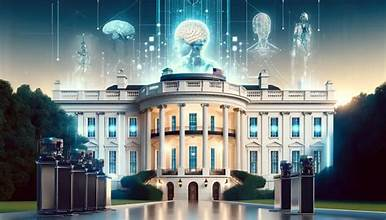
Artificial intelligence is transforming almost every aspect of modern life. Businesses are adopting AI to improve productivity, healthcare providers are using intelligent systems to enhance diagnostics, and educational institutions are beginning to personalize learning experiences. Yet one of the most profound transformations may take place in a sector that affects billions of people every day: government.
Governments are responsible for managing increasingly complex societies. They oversee healthcare systems, transportation networks, taxation, infrastructure, education, public safety, and economic policy. As populations grow and challenges become more complicated, traditional approaches often struggle to keep pace.
Artificial intelligence offers governments the opportunity to become more efficient, more responsive, and more intelligent. The rise of AI could eventually lead to a new era of governance where data-driven decision-making and intelligent systems improve the quality of life for citizens.
The future of government may not simply be digital. It may be intelligent.
Governments Face Unprecedented Complexity
Modern governments process enormous amounts of information every day.
They manage:
- Tax records
- Social services
- Healthcare data
- Economic indicators
- Infrastructure systems
- Immigration processes
- Transportation networks
- Environmental policies
Human institutions often struggle to analyze this volume of information effectively. Decision-makers must constantly balance competing priorities while responding to changing conditions.
Artificial intelligence excels at processing large datasets and identifying patterns that humans might overlook. This capability could enable governments to make better decisions and react faster to emerging problems.
Rather than replacing public institutions, AI has the potential to make them smarter and more capable.
Improving Public Services
Citizens frequently experience frustration when interacting with government agencies.
Common complaints include:
- Long waiting times
- Bureaucratic paperwork
- Complex procedures
- Delayed responses
- Inefficient systems
AI-powered solutions could simplify many of these processes.
Intelligent assistants could help citizens:
- Renew licenses
- Apply for permits
- File taxes
- Access healthcare information
- Request benefits
- Understand regulations
Virtual assistants operating twenty-four hours a day could provide instant support while reducing administrative costs.
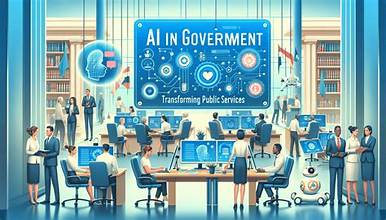
This transformation could make government services faster, more accessible, and more citizen-friendly.
The Rise of Smart Cities
Cities generate enormous amounts of data through transportation systems, energy grids, sensors, and public infrastructure.
Artificial intelligence can help cities become smarter by optimizing:
Traffic Management
AI can reduce congestion by adjusting traffic signals and predicting transportation patterns.
Energy Consumption
Intelligent systems can improve energy efficiency and reduce waste.
Waste Collection
Cities can optimize routes and schedules based on real-time demand.
Public Transportation
AI can improve routes, schedules, and capacity management.
Emergency Response
Resources can be deployed more quickly during accidents or disasters.
Smart cities represent one of the most visible examples of intelligent government in action.
Healthcare Transformation
Healthcare systems are under pressure worldwide.
Population growth, aging societies, and rising costs are creating significant challenges.
Artificial intelligence may help governments improve healthcare through:
- Predictive analytics
- Medical imaging assistance
- Resource optimization
- Administrative automation
- Disease forecasting
- Personalized healthcare support
Hospitals can use AI to allocate resources more efficiently while allowing doctors and nurses to spend more time with patients.
AI is unlikely to replace medical professionals, but it can become a powerful tool that improves healthcare outcomes and reduces costs.
Personalized Education Systems
Traditional education often applies the same approach to every student.
Artificial intelligence opens the possibility of personalized learning experiences.
AI systems can adapt to:
- Learning speed
- Strengths and weaknesses
- Individual interests
- Skill gaps
- Performance patterns
Teachers may receive intelligent support systems that help identify students who need additional assistance.
Governments investing in AI-powered education could create more effective and inclusive learning environments.
Personalized learning has the potential to improve educational outcomes while reducing inequality.
Economic Policy and Planning
Governments continuously monitor:
- Inflation
- Employment
- Productivity
- Growth
- Consumer behavior
- Trade activity
Economic decisions affect millions of people.
AI systems can analyze massive amounts of information and provide insights that improve:
Budget planning
Labor market forecasting
Infrastructure investments
Economic risk analysis
Resource allocation
Although human judgment remains essential, AI can provide valuable support that enables policymakers to make more informed decisions.
Fighting Fraud and Corruption
Billions of dollars are lost every year because of fraud and inefficiency.
Artificial intelligence can help governments detect:
- Tax fraud
- Financial crimes
- Identity theft
- Money laundering
- Benefit abuse
Machine learning algorithms are particularly effective at identifying unusual patterns and suspicious activity.
Improving transparency and reducing corruption strengthens public trust and increases efficiency.
Intelligent monitoring systems may become essential tools for modern governments.
AI and National Security
Artificial intelligence is increasingly influencing national security and defense.
Applications include:
- Cybersecurity
- Threat detection
- Intelligence analysis
- Disaster response
- Border management
AI systems can process information far faster than humans and recognize patterns that may signal potential threats.
However, these capabilities also raise important ethical concerns.
Governments must carefully balance security with privacy and civil liberties.
Maintaining that balance may become one of the defining challenges of the AI age.
Climate and Environmental Protection
Climate change represents one of humanity's greatest challenges.
Artificial intelligence can assist governments in areas such as:
- Flood prediction
- Wildfire detection
- Water management
- Carbon reduction
- Renewable energy optimization
- Pollution monitoring
Advanced forecasting systems allow governments to respond more effectively to environmental risks.
AI could play an essential role in creating more sustainable societies.
Predictive Governments
Traditional governments are often reactive.
They respond after problems occur.
Artificial intelligence creates the possibility of predictive governance.
Examples include:
Predicting healthcare demand
Identifying economic slowdowns
Anticipating traffic congestion
Forecasting natural disasters
Detecting social problems early
Instead of reacting to crises, governments could prepare in advance.
This shift from reactive administration to proactive governance could improve efficiency and reduce costs.
Digital Citizens and AI Assistants
Future governments may provide every citizen with access to intelligent assistants.
These assistants could help individuals:
- File taxes
- Apply for benefits
- Access medical records
- Understand regulations
- Navigate public services
Interacting with governments could become dramatically easier.
Complex bureaucratic systems may eventually be replaced by conversational interfaces powered by AI.
Citizens would no longer need to understand every form and process.
Their AI assistant would guide them.
Ethical Challenges
The rise of intelligent governments raises important questions.
These include:
Privacy
How much information should governments collect?
Transparency
Citizens deserve to understand how AI systems make decisions.
Bias
Algorithms can inherit existing inequalities.
Accountability
Who is responsible when automated decisions are wrong?
Cybersecurity
Protecting digital infrastructure becomes increasingly important.
Technology alone cannot solve these challenges.
Strong regulations and ethical frameworks are essential.
Human Judgment Still Matters
Artificial intelligence should support governments, not replace democratic institutions.
Humans provide:
- Ethics
- Values
- Empathy
- Accountability
- Leadership
Algorithms cannot replace democracy.
Citizens elect representatives, not machines.
AI should serve humanity rather than govern it.
The future of intelligent governments depends on combining machine intelligence with human wisdom.
Global Competition in the AI Era
Countries investing heavily in artificial intelligence may gain advantages in:
- Economic growth
- Innovation
- Productivity
- National security
- Public administration
AI infrastructure could become as important as roads, electricity, and telecommunications.
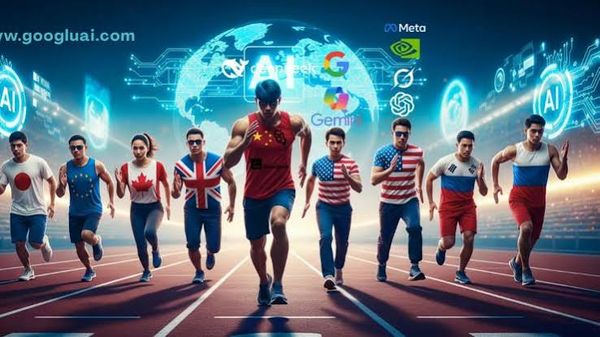
The race to build intelligent governments has already begun.
Nations that fail to adapt may struggle to remain competitive in the decades ahead.
Preparing for the Future
Successful governments should focus on:
- AI literacy
- Digital infrastructure
- Cybersecurity
- Ethical frameworks
- High-quality data
- Public-private partnerships
- Transparent regulation
- Responsible innovation
Transformation will not happen overnight.
But the foundations are being built today.
Conclusion
Artificial intelligence has the potential to reshape governments as profoundly as it is transforming business and industry.
Public services could become faster.
Healthcare systems could become smarter.
Education could become personalized.
Cities could become more efficient.
Economic policies could become more informed.
Yet technology alone cannot create better societies.
Human values, transparency, democracy, and accountability remain essential.
The future will likely not be ruled by machines.
Instead, it will be defined by intelligent partnerships between humans and AI.
The governments that successfully combine technological innovation with human wisdom may shape the next chapter of civilization.
Recommended Free Tools
- ChatGPT Free
- Claude Free
- Google Gemini Free
- Perplexity Free
- NotebookLM
- Canva Free
- QGIS
- KNIME Analytics Platform
- Obsidian
- LibreOffice
Recommended Paid Tools
- ChatGPT Plus
- Claude Pro
- Perplexity Pro
- Microsoft Copilot
- Notion AI
- Power BI
- Tableau
- Databricks
- Snowflake
- Palantir Foundry
- Fireflies.ai
- Grammarly Premium
- ElevenLabs
- Midjourney
- Runway
- Synthesia
- Make.com
- Zapier