Global AI Intelligence Series (Ghost Edition)
AI Workflows That Scale Organizations: How Modern Companies Use Artificial Intelligence to Operate Faster, Leaner, and Smarter

How AI Is Transforming Business Operations from Manual Departments into Connected Intelligent Systems
Organizations have always faced a fundamental limitation: scalability depends on coordination.
As companies grow, complexity increases across every department—marketing, sales, operations, finance, human resources, customer support, and product development. Each function requires communication, planning, execution, and continuous optimization.
Traditionally, scaling meant hiring more people.
More people meant more communication overhead.
More communication meant slower execution.
Artificial intelligence is breaking this model.
Instead of scaling through headcount, modern organizations are beginning to scale through AI-powered workflows—automated, interconnected systems that streamline decision-making, execution, and optimization across departments.
The result is a shift from organizations as human-heavy structures to organizations as AI-augmented operating systems.
This article explains how AI workflows scale organizations, what systems are being used today, and how companies can implement these frameworks to increase efficiency without proportional cost increases.
From Department-Based Structure to Workflow-Based Intelligence
Traditional organizations are structured vertically:
- Marketing team
- Sales team
- Operations team
- HR team
- Finance team
Each department works independently with limited automation between them.
This creates bottlenecks:
- Information silos
- Slow approvals
- Manual reporting
- Repeated tasks
- Misaligned priorities
AI introduces a new structure: workflow-based intelligence systems.
Instead of isolated departments, organizations operate through connected workflows such as:
- Lead-to-revenue workflow
- Customer support automation workflow
- Hiring and onboarding workflow
- Financial reporting workflow
- Product development cycle workflow
Each workflow is powered by AI systems that automate steps, analyze data, and trigger actions.
The organization becomes a network of intelligent processes rather than separate teams.
What AI Workflows Actually Are
An AI workflow is a structured sequence of tasks executed or assisted by artificial intelligence systems.
These workflows typically include:
- Data input
- AI analysis
- Decision-making logic
- Automated execution
- Performance monitoring
- Continuous optimization
Instead of humans manually completing each step, AI systems handle repetitive components while humans oversee strategy and exceptions.
This reduces friction across the organization.
Core Areas Where AI Workflows Scale Organizations
1. Marketing and Growth Systems
AI transforms marketing into a continuous optimization engine.
AI workflows can:
- Generate content at scale
- Analyze audience behavior
- Optimize ad campaigns
- Segment users automatically
- Personalize messaging
- Track conversion funnels
Marketing becomes data-driven and self-adjusting rather than manually managed.
For example:
A campaign can automatically adjust targeting based on performance data without human intervention.
2. Sales Automation Systems
Sales teams benefit heavily from AI workflows.
Modern systems can:
- Qualify leads automatically
- Score prospects based on behavior
- Personalize outreach messages
- Schedule follow-ups
- Predict conversion likelihood
Instead of manual prospecting, AI identifies high-value opportunities and prioritizes them.
This significantly improves efficiency per salesperson.
3. Customer Support Systems
AI-powered support workflows handle:
- Ticket classification
- Automated responses
- Sentiment analysis
- Escalation routing
- Knowledge base updates
AI chat systems resolve common queries instantly while escalating complex issues to human agents.
This reduces response time and operational costs dramatically.
4. Human Resources and Hiring
AI workflows streamline HR processes:
- Resume screening
- Candidate ranking
- Interview scheduling
- Employee onboarding
- Performance tracking
Instead of manually reviewing applications, AI identifies top candidates based on structured criteria.
Onboarding becomes partially automated through guided workflows.
5. Finance and Operations
AI improves operational efficiency through:
- Expense categorization
- Invoice processing
- Financial forecasting
- Budget tracking
- Risk analysis
Financial reporting becomes continuous rather than monthly or quarterly.
This allows leadership to make faster decisions based on real-time data.
6. Product and Development Workflows
AI supports product teams by:
- Analyzing user feedback
- Identifying feature requests
- Prioritizing development tasks
- Generating documentation
- Testing software components
This improves development speed and product-market alignment.

The Role of AI Agents in Organizational Scaling
The next stage of AI workflows involves autonomous agents.
AI agents can:
- Execute multi-step tasks
- Make decisions within defined boundaries
- Coordinate across tools and systems
- Learn from feedback loops
Instead of simply assisting humans, agents actively perform operational tasks.
For example:
An AI agent in marketing might:
- Identify trending topics
- Generate content briefs
- Create drafts
- Schedule publication
- Analyze engagement
- Recommend improvements
This represents a shift from automation to autonomy.
Key Components of an AI Workflow System
To successfully scale an organization using AI workflows, several components are required:
1. Data Layer
All workflows depend on structured data:
- Customer data
- Sales data
- Operational metrics
- Behavioral analytics
Without data, AI systems cannot function effectively.
2. Intelligence Layer
This includes AI models responsible for:
- Language processing
- Prediction
- Classification
- Recommendation
Large language models and machine learning systems form the core of decision-making.
3. Automation Layer
Automation tools execute actions:
- Sending emails
- Updating CRMs
- Triggering notifications
- Creating reports
This layer connects AI decisions to real-world actions.
4. Integration Layer
Organizations require systems that connect tools together:
- CRM systems
- Marketing platforms
- Analytics tools
- Communication systems
Integration ensures workflows operate seamlessly across departments.
5. Feedback Loop Layer
AI workflows improve over time by analyzing:
- Performance metrics
- User feedback
- Conversion data
- Operational efficiency
This creates continuous optimization cycles.
Free Tools for Building AI Workflows
Organizations can begin building AI workflows using accessible tools.
AI and Analysis
- ChatGPT — Workflow design, content generation, automation support
- Google Gemini — Research and business insights
- Perplexity AI — Real-time research with citations
Automation
- n8n — Open-source workflow automation system
- Make — Visual automation builder
- Zapier — Cross-platform automation
Analytics and Operations
- Google Analytics — User behavior tracking
- Google Search Console — Performance monitoring
- Looker Studio — Reporting dashboards
Paid Tools for Enterprise-Level Scaling
AI Systems
- ChatGPT Team/Enterprise — Advanced AI workflows for organizations
- Claude Pro — Long-form reasoning and analysis
- Jasper AI — Marketing automation systems
Data and Intelligence
- Ahrefs — Market and competitor intelligence
- Semrush — Business and SEO analytics
- Mixpanel — Product and user analytics
Automation Platforms
- n8n Cloud — Scalable workflow automation
- Zapier Professional — Enterprise integrations
- Workato — Enterprise automation platform
What a Fully AI-Enabled Organization Looks Like
A modern AI-powered organization operates differently from traditional businesses.
Instead of departments, it has:
- Intelligent workflows
- AI agents
- Automated reporting systems
- Continuous optimization loops
Key characteristics include:
- Faster decision-making
- Reduced manual workload
- Real-time analytics
- Scalable operations without proportional hiring
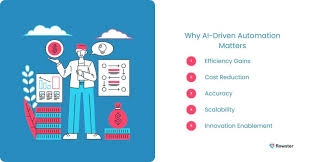
- Higher operational efficiency
The organization becomes more like a software system than a human hierarchy.
Common Mistakes in AI Workflow Implementation
1. Automating Without Strategy
Automation without structure leads to chaos, not efficiency.
2. Poor Data Quality
AI systems are only as good as the data they receive.
3. Over-Automation of Critical Decisions
Strategic decisions should still involve human oversight.
4. Lack of Workflow Integration
Disconnected tools reduce the effectiveness of automation.
Future of AI in Organizational Scaling
The next evolution includes:
- Fully autonomous business units
- AI-managed departments
- Real-time adaptive workflows
- Predictive business operations
- Self-optimizing companies
Organizations will increasingly operate as hybrid systems where humans define direction and AI executes operations.
The companies that adopt this early will gain significant competitive advantage in speed, efficiency, and cost structure.
Final Thoughts
AI workflows are not just improving productivity—they are redefining how organizations scale.
Instead of growing by hiring more people, companies can now grow by building smarter systems.
The future of business scalability is no longer linear.
It is systemic, automated, and intelligent.
Organizations that adopt AI workflow architecture today are effectively building the operating systems of future enterprises.
Those that do not will struggle to compete against faster, leaner, AI-augmented competitors.
Add this section near the end of your article (or after “Free Tools / Paid Tools” depending on structure):
Recommended AI Workflow Tools for Scaling Organizations
Below is a practical stack of tools used to build, automate, and scale AI-powered organizational workflows across departments.
🧠 AI Intelligence & Decision Layer
These tools act as the “brain” of your workflows—handling reasoning, content, analysis, and planning.
Free Tools
- ChatGPT — Core AI assistant for strategy, writing, workflow design, and automation logic
- Google Gemini — Research, summarization, and business ideation
- Perplexity AI — Real-time research with cited sources for decision-making
Paid Tools
- Claude — Advanced reasoning, long-form analysis, and document processing
- ChatGPT Plus — Faster workflows and advanced models for operational scaling
- Jasper AI — Marketing-focused AI workflows for teams
⚙️ Automation & Workflow Orchestration Layer
These tools connect systems together and execute multi-step workflows automatically.
Free / Entry-Level
- n8n — Open-source automation platform for building full AI workflows
- Make — Visual automation builder for cross-app workflows
- Zapier — Simple automation between business tools
Advanced / Paid
- Workato — Enterprise-grade workflow automation
- Pipedream — Developer-friendly automation with APIs and AI triggers
📊 Data, Analytics & Business Intelligence Layer
These tools track performance and feed data back into AI systems.
- Google Analytics — User behavior and conversion tracking
- Google Search Console — Search visibility and SEO performance
- Looker Studio — Custom dashboards and reporting systems
- Mixpanel — Advanced product and user behavior analytics
- Amplitude — Event-based analytics for scaling digital products
🤝 CRM, Sales & Customer Workflow Layer
Used to automate revenue-generating workflows across sales and customer support.
- HubSpot — CRM, marketing automation, and sales pipelines
- Salesforce — Enterprise CRM and workflow automation
- Pipedrive — Lightweight sales pipeline automation
- Zendesk — Customer support automation and ticket workflows
🧩 Knowledge & Internal Workflow Systems
These tools organize internal operations and knowledge for AI systems to use effectively.
- Notion — Central workspace for documentation and workflows
- Confluence — Enterprise knowledge management
- Airtable — Structured data workflows and internal systems
- Coda — Hybrid document + database workflow system
🧠 AI Agent & Advanced Workflow Layer (Next Stage)
These tools represent the future of autonomous organizational systems.
- AutoGPT — Autonomous task execution agents
- LangChain — Framework for building AI-powered workflows and agents
- CrewAI — Multi-agent AI systems for business processes
Recommended Starter Stack (Simple AI Organization Setup)
For small teams or startups:
- ChatGPT
- Notion
- Google Sheets
- Google Analytics
- n8n
- Zapier
This stack alone can automate a large portion of content, marketing, and operational workflows.
Recommended Growth Stack (Scaling Organizations)
For growing companies:
- Claude
- HubSpot
- Make
- Airtable
- Looker Studio
- Semrush / Ahrefs
Recommended Enterprise Stack (Full AI Organization)
For advanced scaling:
- Salesforce
- Workato
- Mixpanel / Amplitude
- LangChain / CrewAI
- Custom AI Agents
- Data warehouse (BigQuery / Snowflake)