How AI Is Creating a New Digital Civilization
Future Society | Artificial Intelligence | Future of Technology | Digital Transformation
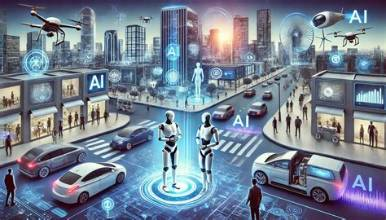
Artificial intelligence is no longer simply another technology we use.
It is beginning to influence the structure of society itself.
For decades, the internet transformed how humans communicate, shop, learn, work, build businesses, consume entertainment, and exchange information. Smartphones then placed that digital world in billions of pockets.
Artificial intelligence could represent the next stage of that transformation.
But this time, something fundamentally different is happening.
The internet connected people to information.
Social media connected people to each other.
Cloud computing connected businesses to global infrastructure.
AI is beginning to connect intelligence to almost everything.
Software can increasingly understand natural language, generate content, analyze information, write code, interpret images, automate workflows, assist with decisions, and interact with other digital systems.
As AI agents become more capable, software may increasingly perform tasks rather than simply provide tools for humans to perform them.
We may therefore be witnessing the early construction of something much larger than another technological industry.
We could be watching the foundations of a new digital civilization emerge.
What Does "Digital Civilization" Actually Mean?
Civilization has always been shaped by technology.
Agriculture changed how humans organized communities.
Writing allowed knowledge to survive generations.
Printing expanded access to information.
Industrialization transformed production.
Electricity reshaped cities and economies.
Computers automated calculation and information processing.
The internet created a globally connected information network.
Artificial intelligence introduces another possibility:
a civilization where intelligence itself becomes increasingly accessible as digital infrastructure.
Imagine billions of people having access to systems capable of helping them:
learn,
research,
translate,
program,
design,
write,
analyze,
plan,
create businesses,
automate work,
and solve problems.
The significance is difficult to overstate.
Historically, sophisticated expertise was scarce.
You needed access to particular people, institutions, books, universities, companies, or geographic locations.
AI does not eliminate the importance of genuine expertise.
But it could dramatically reduce the cost of accessing certain forms of knowledge and cognitive assistance.
That could change the structure of opportunity.
1. Intelligence Is Becoming Infrastructure
One of the most important developments in modern technology is the transformation of AI into infrastructure.
Electricity is infrastructure.
The internet is infrastructure.
Cloud computing is infrastructure.
Soon, AI may increasingly be treated the same way.
Businesses will not necessarily think of themselves as "AI companies."
They will simply use intelligence throughout their operations.
A retailer might use AI for forecasting, customer support, advertising, personalization, and logistics.
A hospital could use specialized AI systems to support administrative workflows, documentation, scheduling, and carefully governed clinical processes.
A university might use AI for tutoring, research support, translation, administration, and personalized learning.
A manufacturer could use AI to optimize production and identify equipment problems.
A small entrepreneur could use AI for research, marketing, software development, customer communication, and business automation.
AI becomes less like a single product and more like a layer embedded throughout the digital economy.
When intelligence becomes infrastructure, every industry can potentially be rebuilt around it.
2. Every Person Could Have a Digital Intelligence Layer
The smartphone gave individuals access to computing almost everywhere.
AI could give individuals something different:
continuous access to personalized cognitive assistance.
Imagine an AI system that understands your projects, schedule, communication preferences, professional responsibilities, learning objectives, and long-term goals.
Instead of starting from zero every time you interact with it, the system maintains appropriate context and helps coordinate different parts of your digital life.
You might ask:
"What should I prioritize today?"
The AI could potentially examine your approved calendar, deadlines, projects, and outstanding tasks before recommending priorities.
You might say:
"Help me understand this contract."
The system could explain difficult terminology and identify areas you may want a qualified professional to review.
You could say:
"Teach me this subject."
The AI could adjust explanations based on what you already understand.
Or:
"Turn this idea into a business plan."
The system could help research the market, organize assumptions, build projections, and identify unanswered questions.
The interface between humans and computers becomes increasingly conversational, contextual, and adaptive.
Computers stop waiting for perfectly structured commands.
They begin understanding human intent.
3. Education Could Become Radically More Personalized
Education may become one of the most socially significant applications of AI.
Traditional education faces a structural limitation.
One teacher may be responsible for dozens of students.
Every student learns differently, but the teacher cannot realistically provide unlimited one-to-one instruction.
AI tutoring could change this equation.
A sufficiently capable educational AI could explain the same concept ten different ways.
It could detect where a student is struggling.
It could create personalized exercises.
It could adjust difficulty dynamically.
It could translate lessons.
It could provide immediate feedback.
It could remain available outside normal classroom hours.
The teacher does not necessarily disappear.
Instead, teachers could gain an additional layer of support.
Educators could spend more time mentoring students, encouraging discussion, developing critical thinking, and addressing complex needs while AI handles some repetitive tutoring and administrative tasks.
The long-term implication could be profound.
High-quality personalized learning might become available to vastly more people.
If implemented responsibly and made broadly accessible, AI could contribute to one of the largest expansions of educational opportunity since the internet.
4. Language Barriers Could Begin to Shrink
Human civilization contains thousands of languages.
Language creates cultural richness, but it can also create economic and informational barriers.
Someone may possess extraordinary talent but struggle to access opportunities because they cannot communicate fluently in a globally dominant language.
AI translation could gradually reduce this disadvantage.
Real-time translation systems are becoming increasingly capable of translating:
text,
speech,
documents,
meetings,
videos,
and conversations.
Imagine joining an international business meeting where every participant speaks their preferred language while AI translates the discussion in near real time.
Imagine publishing an educational course once and making it accessible across dozens of languages.
Imagine a small company in Britain communicating naturally with customers in Japan, Brazil, Germany, or South Korea.
AI does not erase cultural differences or make translation perfect.
Nuance, humor, context, and culturally specific meanings remain difficult.
But even imperfect reduction of language barriers could significantly expand global collaboration.
5. The Digital Economy Could Become More Accessible
Historically, starting a sophisticated digital company required many different skills.
You might need:
a programmer,
designer,
copywriter,
marketer,
salesperson,
researcher,
customer-support team,
and operations specialist.
AI is beginning to compress some of these capabilities.
A founder can already use AI to assist with:
market research,
business planning,
website development,
coding,
branding concepts,
marketing copy,
sales materials,
customer-service workflows,
data analysis,
and content production.
As AI agents improve, these tools could become coordinated systems.
A single entrepreneur may eventually supervise an entire digital operating environment.
This could create a new generation of extremely small but highly productive companies.
A business with three people might produce output previously associated with thirty.
A freelancer could operate internationally.
A specialist could build products without having a traditional technical team.
A creator could transform knowledge into articles, videos, courses, software, and communities.
The economic unit of the digital civilization may therefore become smaller while simultaneously becoming more powerful.
6. AI Agents Could Become Citizens of the Digital Economy
Not citizens in the legal or human sense.
But AI agents may become active participants in digital economic processes.
An agent could potentially:
research products,
compare suppliers,
schedule appointments,
manage workflows,
prepare purchases for approval,
monitor subscriptions,
communicate with other software systems,
and coordinate with other agents.
This creates an entirely new category of economic activity.
Today, most online transactions are initiated directly by humans.
In the future, many digital interactions could occur agent-to-agent.
Imagine your purchasing agent communicating with a supplier's sales agent.
Your scheduling agent coordinates with another person's scheduling agent.
A business procurement agent evaluates approved suppliers and presents the best option to a manager.
A travel agent searches flights, hotels, schedules, and preferences before presenting an optimized itinerary.
The internet was originally designed primarily around humans navigating websites.
The next internet may increasingly need to accommodate both humans and autonomous software agents.
That could fundamentally change digital commerce.
7. Search Could Become Answer, Analysis, and Action
For more than two decades, search engines have served as gateways to the internet.
You type a query.
You receive links.
You open websites.
You compare information.
You decide what to do.
AI changes this process.
Instead of simply finding information, AI can synthesize it.
And AI agents may eventually take the next step by helping execute the resulting action.
The progression looks like this:
Search → Answer → Analysis → Recommendation → Action
Consider travel planning.
Traditional search requires dozens of searches:
flights,
hotels,
transport,
restaurants,
weather,
activities,
reviews,
opening hours,
and prices.
An AI travel system could potentially evaluate these variables simultaneously and create an itinerary based on your requirements.
With permission, an agent could then prepare bookings or execute approved transactions.
This shift from information retrieval to outcome execution could transform how the internet itself works.
8. Creativity Could Become More Abundant
Generative AI has already dramatically reduced the technical barriers involved in creating digital content.
People can generate or assist in producing:
images,
music,
video,
writing,
software,
presentations,
design concepts,
animations,
and interactive experiences.
This does not mean human creativity becomes irrelevant.
The opposite may happen.
When technical execution becomes easier, ideas, taste, storytelling, originality, and judgment become more important.
Imagine someone with an extraordinary movie idea who previously had no access to cameras, actors, visual-effects studios, or production financing.
Future AI systems could allow that person to prototype increasingly sophisticated versions of the idea.
A musician could experiment with arrangements without hiring an entire production team.
An entrepreneur could prototype an application before approaching developers or investors.
A teacher could create interactive educational materials for a specific class.
The ability to transform imagination into digital output could become available to far more people.
We may enter an era of unprecedented creative abundance.
The challenge will shift from:
"Can this be created?"
toward:
"Is this worth creating?"
9. Digital Identity Will Become More Important
As AI-generated content becomes increasingly realistic, verifying identity could become much more important.
If AI can generate convincing:
voices,
photographs,
videos,
documents,
messages,
and digital personalities,
then the internet needs stronger methods for determining authenticity.
Was this message really sent by your bank?
Is this video authentic?
Did this person actually approve this transaction?
Was this document modified?
Is this account operated by a human, an AI agent, or both?
Digital identity systems could therefore become foundational infrastructure for an AI-powered society.
Identity verification, cryptographic signatures, provenance technologies, authentication systems, and trusted digital credentials may become increasingly important.
The more synthetic the internet becomes, the more valuable verified authenticity could become.
10. Trust Could Become the Most Valuable Digital Currency
The first internet economy was built around information.
The social-media economy was built around attention.
The AI economy may increasingly revolve around trust.
When almost anyone can generate professional-looking content instantly, appearance alone becomes less meaningful.
A polished website does not necessarily indicate expertise.
A convincing video may not prove that an event occurred.
A confident AI-generated explanation may still contain incorrect information.
Therefore, people may increasingly value:
verified expertise,
credible sources,
transparent identities,
established reputations,
human relationships,
trusted communities,
and accountable institutions.
Paradoxically, the more AI-generated material exists, the more valuable authentic human trust may become.
Businesses with strong reputations could gain an advantage.
Creators with trusted audiences could become more influential.
Experts who consistently verify information could become more valuable.
AI may create unlimited content.
But it cannot automatically create unlimited trust.

A New Civilization Is Beginning to Take Shape
When we combine all these developments, something much larger becomes visible.
AI-powered education.
AI-assisted businesses.
AI agents.
Real-time translation.
Personalized digital assistants.
Automated commerce.
Generative creativity.
Intelligent software.
Digital identity.
Human-AI collaboration.
These technologies will not evolve independently.
They will increasingly connect.
And when they do, the result could resemble an entirely new layer of civilization operating alongside the physical world.
A world where intelligence is available on demand.
A world where a single entrepreneur can coordinate capabilities once reserved for corporations.
A world where language barriers become smaller.
A world where education becomes more personalized.
A world where software acts rather than merely waits.
A world where billions of humans work alongside billions of AI systems.
This future is not guaranteed to be perfect.
It introduces serious questions about employment, inequality, privacy, surveillance, misinformation, concentration of power, cybersecurity, regulation, and human autonomy.
Those issues cannot be treated as secondary.
The quality of the digital civilization we build will depend not simply on how powerful AI becomes, but on how intelligently society chooses to deploy it.
And that brings us to the biggest questions of all.
How AI Is Creating a New Digital Civilization — Part 2
The first phase of the internet connected computers.
The second connected billions of people.
The next phase may connect people, organizations, machines, data, and artificial intelligence into an increasingly intelligent digital ecosystem.
As we explored in Part 1, AI is becoming more than another category of software. It is beginning to function as a new layer of digital infrastructure.
But what happens when that infrastructure spreads across society?
The consequences could extend far beyond productivity.
AI could influence how cities operate, how governments deliver services, how people work, how businesses compete, how knowledge is distributed, how economies function, and even how humans determine what is authentic.
We are entering a period in which society must decide not only what artificial intelligence can do, but also what we want it to do.
That distinction could determine what kind of digital civilization emerges.
11. AI Could Transform the Cities We Live In
Modern cities are extraordinarily complex systems.
Transportation, energy, housing, healthcare, policing, waste management, infrastructure, communications, public services, and millions of individual decisions interact continuously.
AI could help cities understand these systems more effectively.
Traffic systems could analyze congestion patterns and dynamically optimize signals.
Public transport systems could better predict passenger demand.
Energy networks could balance supply and demand more efficiently.
Infrastructure monitoring systems could identify potential maintenance problems before major failures occur.
Waste collection could be optimized based on actual demand rather than fixed schedules.
City planners could model how proposed developments might affect traffic, housing, energy use, and public services.
The result could be the emergence of genuinely intelligent urban infrastructure.
However, smarter cities also create major governance questions.
Who controls the data?
What information should governments be allowed to collect?
How long should it be retained?
Where should automated decision-making be prohibited?
How can citizens challenge decisions made with algorithmic assistance?
AI could make cities more efficient.
But efficiency cannot come at the expense of fundamental rights.
12. Governments Could Become More Digital and Personalized
Governments administer some of society's most complicated systems.
Taxation.
Benefits.
Licensing.
Healthcare.
Immigration.
Education.
Planning.
Public records.
Business regulation.
Social services.
Many government processes still depend on complicated forms, fragmented databases, telephone queues, and manual administration.
AI could potentially simplify some of these interactions.
Imagine a secure government assistant capable of explaining which services a person may be eligible for and guiding them through the appropriate process.
Instead of searching dozens of webpages, citizens could ask:
"What support am I eligible for?"
or:
"What documents do I need for this application?"
AI could explain the process in plain language and provide information in multiple languages or accessible formats.
But important government decisions cannot simply be delegated to opaque AI systems.
Decisions affecting rights, benefits, immigration status, criminal justice, housing, or access to essential services require accountability, transparency, due process, and meaningful human oversight.
The future of digital government should therefore not be automation at any cost.
It should be better public service supported by carefully governed technology.
13. Work Could Shift From Execution to Orchestration
For centuries, technological progress has changed the meaning of work.
Industrial machinery automated physical labour.
Computers automated calculation and information processing.
The internet automated communication and distribution.
AI may automate portions of cognitive work.
This does not necessarily mean humans disappear from the workplace.
Instead, many roles could move toward orchestration.
Consider a future marketing professional.
Rather than manually researching every topic, creating every first draft, formatting every campaign, and analyzing every spreadsheet, they might supervise several specialized AI systems.
One agent conducts research.
Another analyzes customer behaviour.
Another generates campaign concepts.
Another prepares content variations.
Another monitors performance.
The human professional defines objectives, evaluates recommendations, approves important decisions, and adjusts strategy.
The same pattern could appear in:
software development,
financial analysis,
consulting,
education,
research,
sales,
administration,
design,
and entrepreneurship.
Knowing how to perform a task manually will remain valuable.
But knowing how to design and supervise systems that perform thousands of tasks could become even more valuable.
14. The AI Economy Could Reward Smaller Teams
Industrial economies rewarded scale.
Large factories could produce more cheaply.
Large corporations could employ thousands of specialists.
Digital technology began changing this equation.
Small software companies could serve millions of users.
Creators could reach global audiences.
Independent ecommerce businesses could sell internationally.
AI could accelerate this trend.
Imagine a company with five employees operating with the productive capacity of a traditional organization several times its size.
AI systems could assist with:
research,
coding,
marketing,
sales administration,
customer support,
financial reporting,
translation,
analytics,
and operations.
Human employees could focus on the areas requiring strategic judgment, relationships, creativity, accountability, and leadership.
This could produce a new category of company:
the AI-native micro-enterprise.
These organizations may remain physically small while becoming economically powerful.
For entrepreneurs, that could dramatically lower the cost of experimentation.
Instead of raising significant capital before testing an idea, founders could potentially use AI to build prototypes, research markets, create marketing assets, test demand, and establish basic operations.
The distance between idea and business could become much shorter.
15. AI Could Create Entirely New Digital Markets
Major technologies rarely create only one industry.
The automobile created fuel stations, insurance markets, repair businesses, road infrastructure, logistics industries, dealerships, and countless related services.
The internet created ecommerce, digital advertising, cloud computing, social media, streaming, online marketplaces, cybersecurity, and the creator economy.
AI is likely to produce its own ecosystem.
Potential markets include:
AI agents,
agent marketplaces,
AI security,
AI evaluation,
AI governance,
synthetic media verification,
AI education,
personal AI assistants,
AI workflow consulting,
specialized industry models,
AI-powered robotics,
AI-generated entertainment,
and agent-to-agent commerce.
Entire businesses may eventually exist primarily to serve AI systems rather than human users directly.
For example, businesses could provide verified data feeds specifically designed for agents.
Others might provide authentication services allowing agents to prove their authority before completing transactions.
Still others could provide marketplaces where companies hire specialized digital agents for particular workflows.
The AI economy could therefore become an economic layer within the broader digital economy.
16. AI Could Democratize Expertise — But Not Automatically
One of AI's greatest potential benefits is making certain forms of knowledge more accessible.
A small business owner who cannot afford a large consulting team can use AI for preliminary research.
A student can receive personalized explanations.
A programmer can learn unfamiliar technologies faster.
A creator can receive assistance with editing and translation.
An entrepreneur can analyze markets that previously required significant research resources.
This could democratize access to cognitive tools.
But there is another possibility.
If the most capable AI systems become available only to wealthy individuals or powerful corporations, AI could increase existing inequalities.
Imagine two businesses competing.
One has access to advanced agents, proprietary datasets, enormous computing resources, and sophisticated automation.
The other has access only to basic AI tools.
The productivity difference could become significant.
Access therefore matters.
Education matters.
Digital infrastructure matters.
AI literacy matters.
The future digital divide may not simply be between people who have internet access and those who do not.
It could be between people who know how to leverage artificial intelligence effectively and those who do not.
17. AI Literacy Could Become as Important as Digital Literacy
Twenty-five years ago, knowing how to use the internet effectively provided a major advantage.
Eventually, digital literacy became a basic professional requirement.
AI literacy could follow a similar path.
But AI literacy is not simply knowing how to type prompts into a chatbot.
It includes understanding:
what AI does well,
where it makes mistakes,
how to verify information,
how to protect sensitive data,
how to automate workflows,
how to evaluate AI-generated content,
how to recognize manipulated media,
and when human expertise is necessary.
The ability to ask good questions will matter.
The ability to evaluate answers may matter even more.
Schools, universities, businesses, and governments may eventually need to treat AI literacy as a fundamental skill.
Because in a world saturated with artificial intelligence, the greatest danger may not be having no access to AI.
It may be using AI without understanding its limitations.
18. Privacy Could Become One of Society's Biggest AI Challenges
AI becomes more useful when it understands context.
A personal AI assistant could potentially become more effective if it understands your:
calendar,
documents,
communications,
preferences,
projects,
financial information,
and routines.
But the more an AI knows, the more important privacy becomes.
Who stores that information?
Who can access it?
Is it used to train other systems?
Can it be sold?
Can governments request it?
Can hackers steal it?
Can users permanently delete it?
These questions will become increasingly important as AI systems become more personalized.
The ideal personal AI system may know an enormous amount about its user.
That makes security architecture critical.
The future of personal AI may therefore depend heavily on technologies such as:
strong encryption,
granular permissions,
local processing,
secure authentication,
data minimization,
and transparent privacy controls.
Trust will determine whether people are comfortable allowing AI deeper into their lives.
19. The Battle Against Digital Misinformation Will Intensify
Generative AI dramatically reduces the cost of producing content.
That creates extraordinary creative opportunities.
It also creates serious risks.
Synthetic:
images,
voices,
videos,
articles,
reviews,
documents,
and online identities
can become increasingly convincing.
The internet may therefore face a fundamental authenticity problem.
When seeing is no longer believing, how do we determine what is real?
The answer may involve a combination of:
digital signatures,
content provenance,
trusted publishers,
identity verification,
media literacy,
platform moderation,
and technical detection systems.
But technology alone will not solve the problem.
Society will need stronger habits of verification.
People may become less willing to trust anonymous viral content and more dependent on sources with established reputations.
In an era of infinite synthetic media, credibility becomes scarce.
And scarcity creates value.
20. Human Creativity May Become More Valuable, Not Less
One common fear is that generative AI will make human creativity irrelevant.
But there is another possibility.
AI may make generic content abundant while making exceptional human creativity more valuable.
Imagine a world where millions of competent images, songs, videos, articles, and advertisements can be generated every hour.
The technical ability to produce content becomes less rare.
What remains scarce?
Original ideas.
Taste.
Experience.
Emotion.
Perspective.
Storytelling.
Judgment.
Authenticity.
Community.
Human connection.
AI can help someone create a song.
But deciding what the song should communicate remains a creative decision.
AI can generate a movie scene.
But deciding which story deserves to be told remains human.
AI can generate thousands of marketing messages.
But understanding what customers genuinely care about requires insight.
The creative economy could therefore become less about technical production and more about direction and meaning.
21. Human Relationships Could Become More Important
As automation spreads, human interaction may become increasingly valuable.
Consider customer service.
If almost every routine interaction is handled by AI, reaching an experienced human during an unusual or emotionally difficult situation could become a premium experience.
The same may happen in education.
AI tutors could explain academic concepts, while teachers focus more on mentorship and motivation.
Doctors could use AI to support analysis while spending more attention on communication and patient relationships.
Managers could automate reporting and administration while spending more time developing employees.
The paradox of the AI era may be that greater automation increases the value of genuinely human interaction.
Efficiency is valuable.
But people also want empathy, trust, understanding, accountability, and connection.
A successful digital civilization must preserve those qualities.
22. What Could Society Look Like by 2030?
No one can predict the future precisely.
Technological progress rarely follows a perfectly straight line.
There will be breakthroughs.
There will be failures.
There will be regulatory battles.
There will be unexpected consequences.
But several trends appear plausible.
By 2030, many people could routinely work alongside AI agents.
Personal AI assistants may become significantly more capable.
Real-time translation could make international communication easier.
AI-generated media could become common across entertainment and advertising.
Software development could become increasingly automated.
Education may become more personalized.
Businesses may operate with smaller teams and greater automation.
Robotics could bring AI capabilities further into the physical world.
Digital identity and content verification could become more important.
AI literacy could become a standard professional skill.
And the distinction between "AI software" and ordinary software could gradually disappear.
We rarely describe companies today as "internet companies" simply because they use the internet.
Eventually, we may stop describing companies as "AI companies."
AI will simply be part of how modern organizations operate.
23. Beyond 2030: The Intelligent Internet
The internet we know today is largely built around human activity.
Humans search.
Humans browse.
Humans purchase.
Humans communicate.
Humans publish.
Humans organize information.
The next version of the internet could contain billions of software agents performing many of these activities alongside us.
Your personal agent could communicate with a company's service agent.
Business agents could negotiate schedules.
Research agents could continuously analyze public information.
Commerce agents could compare products based on individual preferences.
Software agents could build and maintain other software.
The internet becomes less like a static network of webpages and more like an active network of intelligence.
This could be one of the largest structural changes in the history of computing.
24. The Question Is Not Whether AI Changes Civilization
Artificial intelligence is already changing society.
The more important question is:
What kind of civilization do we build with it?
Technology does not automatically produce good outcomes.
The same technology can create enormous benefits and serious harm depending on incentives, regulation, design, access, and human behaviour.
AI could improve education.
It could also spread misinformation.
AI could expand economic opportunity.
It could also concentrate wealth.
AI could improve healthcare.
It could also threaten privacy.
AI could make businesses more productive.
It could also disrupt employment.
AI could democratize creativity.
It could also flood digital environments with low-quality synthetic material.
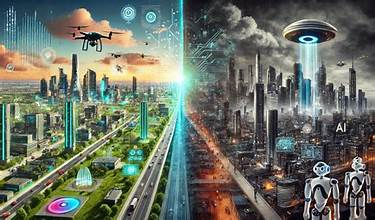
Both sides can exist simultaneously.
The future therefore requires more than technological progress.
It requires governance, education, ethics, security, accountability, and informed public debate.
25. Building a Human-Centered Digital Civilization
The goal should not be to create a civilization optimized exclusively for machines.
Nor should the goal be to stop technological progress.
The more useful objective is building systems that expand human capability while protecting human agency.
That means designing AI around principles such as:
Human oversight
People should remain accountable for consequential decisions.
Transparency
Users should understand when they are interacting with AI and how important automated decisions are made.
Privacy
Personal information should be protected rather than treated as unlimited fuel for algorithms.
Security
Powerful AI systems require strong safeguards.
Accessibility
The benefits of AI should not belong exclusively to the wealthiest organizations.
Education
People need the skills required to use AI effectively and critically.
Authenticity
Society needs reliable ways to distinguish trustworthy information from manipulation.
Human dignity
Efficiency should never become more important than fundamental human rights.
These principles will matter more as AI becomes more capable.
Final Thoughts: Civilization Is Entering Its Intelligent Era
Human civilization has experienced several great technological transformations.
Agriculture allowed permanent settlements.
Writing allowed knowledge to travel across generations.
Printing expanded access to information.
Industrialization multiplied physical productivity.
Electricity transformed modern life.
Computers automated information processing.
The internet connected humanity.
Artificial intelligence may represent the next layer.
It could make intelligence itself increasingly programmable, scalable, and accessible.
That possibility changes almost everything.
Businesses become more automated.
Education becomes more personalized.
Software becomes more autonomous.
Language barriers become smaller.
Digital creativity becomes abundant.
AI agents become economic participants.
Individuals gain capabilities once available only to large organizations.
And the internet evolves from a network of information into a network increasingly populated by intelligent systems.
This does not mean humanity is disappearing from the equation.
Quite the opposite.
As machines become more capable, human choices become more consequential.
We will decide what these systems are allowed to do.
We will determine what values they reflect.
We will establish their boundaries.
We will decide which decisions require human responsibility.
And we will determine whether artificial intelligence becomes primarily a mechanism for concentration and control or a technology that expands human opportunity.
The defining challenge of the AI era is therefore not simply building more intelligent machines.
It is building a more intelligent society around them.
The digital civilization of the future is not something that suddenly appears in 2030, 2040, or 2050.
We are constructing it now.
Every AI system we deploy, every regulation we introduce, every workflow we automate, every educational system we redesign, and every standard we establish contributes to its architecture.
The future of AI is therefore inseparable from the future of society.
Artificial intelligence may be the technology.
But civilization is the project.
Ghost SEO Optimization
Primary Keyword: AI digital civilization
Secondary Keywords: future of AI, artificial intelligence society, digital civilization, AI future society, AI transformation, future technology, AI economy, AI agents, AI-powered society, future of work, human AI collaboration, intelligent internet.
Long-Tail SEO Keywords:
- how AI will change society
- how artificial intelligence will change the future
- AI and the future of civilization
- future of humans and artificial intelligence
- how AI will transform everyday life
- AI digital civilization explained
- future society with artificial intelligence
- impact of AI on human civilization
- AI agents and future society
- AI economy of the future
- artificial intelligence trends 2030
- future of AI agents
- AI and future jobs
- human AI collaboration
- AI and digital transformation
- future of the intelligent internet
SEO Meta Title
How AI Is Creating a New Digital Civilization
SEO Meta Description
Artificial intelligence is creating a new digital civilization. Explore how AI could transform work, education, business, cities, creativity, privacy, digital identity, the economy, and human society by 2030 and beyond.
Recommended Ghost URL Slug
/how-ai-is-creating-a-new-digital-civilization
Recommended Ghost Excerpt
Artificial intelligence is becoming more than a productivity technology. From AI agents and personalized education to automated businesses and intelligent cities, AI could create an entirely new layer of digital civilization.
Ghost Tags
Artificial Intelligence, Future Society, Future of AI, Digital Civilization, AI Agents, Future of Work, AI Economy, Technology, Digital Transformation, Human-AI Collaboration
Suggested Ghost Newsletter CTA
The future isn't waiting. Neither should we.
Subscribe for in-depth analysis of artificial intelligence, AI agents, automation, digital business, emerging technology, and the forces reshaping the future of society.
If this article gave you a new perspective on where artificial intelligence is heading, share it with someone who wants to understand the next phase of the digital revolution.
Subscribe today and stay ahead of the technologies building tomorrow's world.
Want More In-Depth AI, Technology, and Future Innovation Insights?
If you enjoyed this article and would like access to more exclusive content covering artificial intelligence, psychology, technology, digital transformation, business innovation, entrepreneurship, data science, and the future of work, join my communities on the platforms below. I regularly publish premium articles, expert analysis, research, practical guides, and exclusive content designed to help readers stay ahead in the rapidly evolving world of AI and emerging technologies.
⭐ Become a Patreon Member
Support independent research and gain access to exclusive articles, early releases, premium content, behind-the-scenes updates, and future AI reports.
👉 Patreon:
https://patreon.com/GlobalAIIntelligence2026?utm_medium=unknown&utm_source=join_link&utm_campaign=creatorshare_creator&utm_content=copyLink
📩 Subscribe on Substack
Receive exclusive newsletters, premium long-form articles, industry insights, AI trends, and subscriber-only content delivered directly to your inbox. 👉 Substack:
https://substack.com/@mrscallimi
⭐ Become a Substack Member
Support independent research and gain access to exclusive articles, early releases, premium content, behind-the-scenes updates, and future AI reports. 👉 Substack :
https://substack.com/@mrscallimi
Stay Ahead of the AI Revolution
The world is changing faster than ever. By joining these communities, you'll gain valuable insights into:
- 🤖 Artificial Intelligence
- 🧠 Psychology and Human Behavior
- 📊 Data Science & Analytics
- 💼 Business & Entrepreneurship
- 💻 Digital Transformation
- 🚀 Emerging Technologies
- 📈 Future Careers & Skills
- 🔬 AI Research & Innovation
- 🌍 Global Technology Trends
Thank you for reading and for supporting independent research. Together, we can better understand the technologies shaping our future.