The Future of AI in Everyday Life: How Artificial Intelligence Will Transform the Way We Live
AI is moving beyond offices and technology companies. It is becoming part of how we manage our homes, health, money, education, travel and relationships.
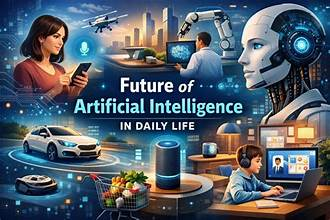
Artificial intelligence is often discussed as if it belongs to the future.
We imagine advanced robots, self-driving cities and digital assistants capable of managing every part of our lives. Yet AI is already present in many ordinary activities.
It recommends films and music. It filters unwanted emails, predicts traffic, recognises faces in photographs and helps banks detect suspicious transactions. It powers customer-service chatbots, translation tools, navigation systems and increasingly capable personal assistants.
Most people use AI every day, even when they do not realise it.
What we are experiencing now, however, is only the beginning.
The next stage of artificial intelligence will be more personal, proactive and connected. Instead of waiting for people to issue individual commands, AI systems will increasingly understand goals, remember preferences and coordinate tasks across different services.
An assistant might compare your diary with traffic conditions, reorganise an appointment, reserve transport and remind you to bring the correct documents. A health application might recognise an unusual pattern in your sleep or activity and suggest that you speak with a medical professional.
A household energy system could learn when rooms are used and reduce unnecessary consumption without affecting comfort.
These possibilities could make everyday life easier, safer and more personalised. They could also create serious concerns involving privacy, dependence, inequality and control.
The future of AI in everyday life will therefore not be defined only by what technology becomes capable of doing. It will depend on which choices individuals, businesses and governments make about how that capability should be used.
AI Will Become Less Visible but More Influential
The most successful technologies often disappear into ordinary life.
People do not think about the complex networks involved whenever they switch on a light, send a message or make a card payment. The technology operates quietly in the background.
Artificial intelligence is likely to follow the same pattern.
Today, many AI experiences require users to open a dedicated application, enter a prompt and evaluate the answer. In the future, intelligence will be built into the products and services people already use.
Email systems will organise messages based on personal priorities. Shopping platforms will predict what a household needs. Cars will monitor road conditions and driver attention. Digital assistants will coordinate calendars, documents, communications and payments.
AI may become less noticeable precisely because it becomes more integrated.
This could create an enormous increase in convenience. Instead of managing dozens of separate applications manually, people may describe what they want to achieve and allow an intelligent system to coordinate the necessary steps.
For example, rather than searching individually for flights, hotels, local transport and activities, a traveller might tell an assistant:
“Plan a five-day affordable holiday in a warm European city next month, avoid early flights and make sure the hotel is accessible.”
The system could compare options, explain trade-offs and prepare a complete itinerary.
The person would still approve the final purchase, but much of the research and organisation could happen automatically.
This shift—from tools that answer questions to systems that complete multi-stage objectives—will be one of the most important developments in everyday AI.
Personal AI Assistants Could Become Digital Life Managers
Today’s voice assistants are useful for simple activities such as setting timers, playing music and answering factual questions.
Future assistants will be significantly more capable.
A personal AI may remember your preferences, communication style, regular commitments and long-term goals. With permission, it could connect information from your calendar, email, finances, health applications and household devices.
This would allow it to provide highly personalised support.
It might:
- Prepare a daily summary of important appointments and messages
- Identify bills that are increasing unexpectedly
- Draft replies in your preferred tone
- Remind you about important application deadlines
- Organise documents for tax or benefit purposes
- Suggest when to leave based on real-time travel conditions
- Compare subscription costs and identify services you rarely use
- Help plan meals around dietary needs and available ingredients
- Track progress towards savings, fitness or education goals
- Coordinate responsibilities between family members
The greatest value may not come from answering individual questions. It may come from reducing the mental burden of remembering and organising hundreds of small responsibilities.
This could be particularly useful for older people, individuals with disabilities, busy parents and anyone who struggles with memory, organisation or complex administrative systems.
However, such assistance would require access to extremely sensitive information. A digital life manager might know where a person goes, who they contact, what they buy and which medical conditions they manage.
The convenience could be considerable, but so could the privacy risk.
People will need meaningful control over what their assistants can access, remember and share.
The Smart Home Will Become More Context-Aware
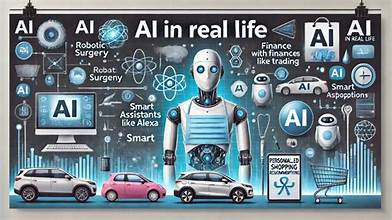
Smart homes currently include connected lights, speakers, thermostats, cameras and appliances. Many of these devices follow simple schedules or respond to direct commands.
AI will make homes more adaptive.
Instead of switching heating on at the same time every day, a system could consider weather conditions, energy prices, occupancy and individual temperature preferences.
Lighting could adjust based on natural daylight and household routines. Security systems could distinguish between ordinary movement, expected visitors and genuinely unusual activity.
Kitchen technology could track available food, suggest recipes and help reduce waste. Appliances could identify signs of mechanical failure before they break.
For people with disabilities or reduced mobility, intelligent homes could create greater independence. Voice, gesture and automated routines may allow someone to control doors, lighting, communication and safety systems without physical assistance.
AI could also detect potentially dangerous situations, such as an appliance being left on or an older resident experiencing a fall.
The challenge will be ensuring that homes remain under the control of the people living in them.
A connected household should not become a surveillance environment in which companies continuously collect behavioural data. Essential devices should continue operating when an internet connection fails, and users should be able to override automated decisions easily.
A genuinely smart home will not simply contain more technology. It will use technology in a way that respects safety, dignity and personal choice.
Healthcare Will Become More Preventive and Personalised
Healthcare may be one of the most important areas of everyday AI.
Current health systems often respond after a person becomes ill. Artificial intelligence could help move some care towards earlier detection and prevention.
Wearable devices already measure heart rate, activity, sleep and blood oxygen. Future systems may combine these signals to identify meaningful changes before symptoms become severe.
An AI application might notice that someone’s resting heart rate, sleep quality and activity level have changed together. Rather than offering a diagnosis, it could advise the person to monitor the situation or contact a qualified professional.
AI may also help people manage long-term conditions by reminding them about medication, tracking symptoms and explaining care instructions in accessible language.
Doctors could use AI to summarise medical records, identify possible drug interactions and compare symptoms with large amounts of clinical knowledge.
This does not mean machines should replace healthcare professionals.
Medical information is complex, and AI can make mistakes. Symptoms may have several explanations, and treatment decisions often depend on circumstances that are difficult to capture in data.
The strongest model is likely to be AI-supported healthcare: technology identifies patterns and organises information while trained professionals make accountable decisions.
Privacy will be critical. Health information is among the most sensitive data a person possesses. People need to understand who can access it, how it is protected and whether it is being used to train commercial systems.
If implemented responsibly, AI could improve early detection, reduce administrative pressure and help patients understand their own health more clearly.
Education
| My Complete AI Research Workflow | Research |
Could Become More Individual
Traditional education frequently requires one teacher to support many students who learn at different speeds and in different ways.
AI tutoring systems could provide more personalised assistance.
A student struggling with algebra might receive an alternative explanation, additional examples and practice questions matched to their current level. Someone learning a language could practise conversation at any time and receive immediate feedback.
An adult studying for a professional qualification could ask an AI tutor to turn complex material into a step-by-step lesson or create revision exercises focused on their weakest areas.
This could make high-quality educational support more widely available.
AI may also help teachers by preparing lesson materials, organising feedback and identifying subjects where students need additional support. That could create more time for teaching, discussion and personal guidance.
However, education involves more than transferring information.
Students need motivation, curiosity, discipline and social development. They need to learn how to disagree respectfully, cooperate with others and defend their reasoning.
There is also a risk that students will allow AI to complete assignments without developing the underlying ability themselves.
Future education should teach students how to work with AI while continuing to think independently. Assessments may need to focus more on projects, explanations and the application of knowledge rather than standard written answers.
AI can become a powerful tutor, but it should strengthen learning rather than provide a shortcut around it.
Shopping Will Become More Personal—and More Persuasive
Online shopping platforms already recommend products based on browsing and purchase history. Future AI systems will make these recommendations more detailed and interactive.
A person may describe what they need conversationally:
“I need a reliable laptop under £800 for university, video editing and everyday business work.”
An AI shopping assistant could compare specifications, analyse reviews, explain weaknesses and recommend suitable options.
It might also monitor prices or identify whether a cheaper subscription would meet the same need.
This could save time and help consumers make better decisions.
But AI will also become a powerful selling tool.
Retailers may create highly personalised advertisements based on a person’s interests, income, habits and emotional responses. Virtual sales assistants could adapt their language to overcome individual objections.
The line between helpful recommendation and manipulation could become difficult to recognise.
Independent AI assistants may become important because their purpose would be to represent the buyer rather than the seller. Such systems could compare claims, identify hidden fees and warn users when a recommendation is influenced by advertising payments.
Consumers will need transparency about why a product is being suggested and whether the system receives commission.
In an AI-driven marketplace, trustworthy advice could become more valuable than endless choice.
Money Management Could Become More Accessible
Financial planning is difficult for many households. People must manage bills, subscriptions, debt, savings, taxes and unpredictable expenses.
AI could make everyday financial guidance more accessible.
A personal finance system might categorise spending, forecast upcoming costs and identify unusual charges. It could warn that a household is likely to exceed its budget or explain how reducing a particular expense would affect a long-term savings goal.
AI could also help people understand complicated financial documents by translating technical language into clear explanations.
For small-business owners, it may help monitor cash flow, prepare invoices and organise records.
However, financial recommendations can carry serious risks.
An AI system should not encourage someone to make an investment without understanding their circumstances and tolerance for loss. Automated decisions affecting loans, insurance or employment must be monitored for unfair bias.
People also need protection against increasingly sophisticated fraud. Criminals may use AI-generated voices, messages and videos to impersonate relatives or trusted organisations.
Banks and technology companies will use AI to detect suspicious activity, but individuals will need stronger verification habits.
Families may establish a private word for urgent requests. Organisations may require a second method of confirmation before money is transferred.
AI will make financial services more convenient while also making digital trust more complicated.
Travel and Transport Will Become More Predictive
Navigation applications already use data to predict traffic and recommend faster routes. Future AI could coordinate entire journeys across cars, buses, trains, bicycles and walking routes.
A travel assistant might adjust plans automatically when a train is cancelled. It could locate an accessible alternative, notify the person they are meeting and update a reservation.
Autonomous vehicles may eventually reduce some accidents caused by distraction, fatigue or human error. They could also increase independence for people who cannot drive.
Yet fully autonomous transport will require more than technical progress. It will require reliable infrastructure, clear legal responsibility and public trust.
Who is accountable when an automated vehicle makes the wrong decision? How should systems respond to unusual road conditions? How will pedestrians and human drivers interact with autonomous vehicles?
In cities, AI may help manage traffic lights, public transport schedules and delivery routes. This could reduce congestion and emissions.
The best outcome would not necessarily be more individual cars. It could be a more coordinated transport system that gives people convenient alternatives to driving.
Entertainment Will Become Interactive
AI is already changing how music, films, games and digital content are produced.
In the future, entertainment may become more personalised and interactive.
Games could adapt their stories to individual decisions. Educational programmes could adjust their complexity based on the viewer. Virtual characters may hold open-ended conversations rather than follow fixed scripts.
People might create personalised stories featuring original characters or generate music suited to a particular activity or mood.
Independent creators will gain access to production capabilities once available only to major studios. A small team may use AI for animation, visual effects, translation and sound design.
This could increase creative opportunity and allow stories from more cultures and communities to reach global audiences.
It could also produce an overwhelming amount of low-quality or repetitive content.
When almost anyone can generate media quickly, attention becomes even more scarce. Audiences may place greater value on trusted creators, strong curation and work connected to genuine human experience.
Copyright and consent will remain major issues. Artists should have meaningful control over how their work, image and voice are used. Viewers should also know when media has been synthetically generated or altered.
AI will expand what creators can produce, but society must decide how originality and ownership are protected.
Communication Could Cross Language Barriers
AI translation is improving rapidly.
Real-time translation could allow people who speak different languages to communicate through voice or video with much less delay. Travellers could understand signs and conversations. Businesses could serve international customers more easily.
Students could access educational resources previously unavailable in their language. Immigrant communities could communicate more effectively with healthcare, housing and government services.
This could make the world more connected.
However, language carries culture, humour, emotion and meaning that cannot always be translated word for word. Important legal, medical or diplomatic communication will still require human expertise.
There is also a danger that dominant languages and cultures will shape how AI systems interpret the world.
Developers need high-quality data from a broad range of languages, including those spoken by smaller communities.
The goal should not be to make everyone communicate in the same way. It should be to help people understand one another while preserving linguistic and cultural differences.
Relationships with AI Will Become More Complicated
People are already using AI companions for conversation, emotional support and entertainment.
Future systems may remember past discussions, respond with personalised personalities and appear increasingly human.
For someone who is isolated, an AI companion might provide useful conversation or encourage healthy routines. It could remind them to contact friends, attend appointments or seek professional help.
But emotional dependence presents real risks.
A company could design a companion to maximise engagement, encourage purchases or discourage users from cancelling a subscription. People may disclose sensitive information without understanding how it is stored.
AI should not be presented as a substitute for genuine relationships or qualified mental-health care.
Clear boundaries will be necessary. Users should know that they are interacting with a system. They should be able to delete their information and understand whether conversations are being reviewed or used for training.
The purpose of supportive AI should be to strengthen human well-being and connection—not to exploit loneliness.
Work and Personal Life Will Become More Connected
AI could help people complete work faster, manage schedules and reduce administrative pressure.
It could also make it more difficult to disconnect.
If intelligent assistants can prepare reports, answer messages and monitor projects at any time, employers may expect workers to remain constantly available.
People may feel pressure to produce at machine speed or manage larger workloads because automation has made individual tasks faster.
The benefits of AI productivity should include improved quality of life, not only increased output.
Businesses will need clear boundaries around working hours, monitoring and employee data. Workers should understand when AI is evaluating their performance and have a way to challenge inaccurate conclusions.
Used responsibly, AI could support shorter working weeks, flexible employment and greater access for people with disabilities.
Used carelessly, it could intensify surveillance and stress.
The future of work-life balance will depend less on technical capability than on workplace rules and organisational values.
Privacy Will Be the Price of Personalisation
AI becomes more helpful when it understands more about the user.
A system can provide better health suggestions if it accesses medical data. It can offer better travel advice if it knows someone’s location and calendar. It can organise finances if it sees spending and income.
This creates a fundamental trade-off.
People want personalised services, but personalisation requires information.
The solution cannot be asking users to accept long and confusing terms they rarely read. Privacy controls must be clear, specific and easy to change.
Individuals should be able to decide:
- Which information an AI system can access
- How long the information is stored
- Whether it can be shared with other companies
- Whether it can be used to train models
- How to correct or delete it
- When human employees can review it
Some AI processing may take place directly on personal devices, reducing the need to send sensitive information to external servers.
Strong security and privacy protection will become competitive advantages. People may choose assistants and services based not only on capability but also on trust.
AI Access Could Reduce or Increase Inequality
AI has the potential to make education, healthcare information and professional support more accessible.
A student without access to a private tutor could receive personalised explanations. A small business could gain marketing and analytical capabilities previously available only to large companies.
A person with a disability could use voice control, automated assistance and personalised interfaces to participate more independently.
However, these benefits will not be distributed automatically.
The most capable systems may require expensive subscriptions, new devices or fast internet access. Some communities may have limited digital infrastructure or fewer opportunities to develop AI literacy.
If public services rely heavily on AI without offering human alternatives, vulnerable people could be excluded.
Governments and businesses should ensure that essential systems remain accessible to those who cannot use digital tools easily. Education in AI literacy should be widely available, and technology should be designed with different abilities and languages in mind.
AI can reduce inequality only if inclusion is treated as a requirement rather than an optional feature.
How to Prepare for Everyday AI
You do not need to adopt every new tool immediately.
Start with one practical problem. This might be organising your schedule, understanding a document, planning meals or learning a new subject.
Use AI as an assistant, but verify important information.
Avoid entering confidential financial, medical or legal information into a system unless you understand how that data is protected.
Maintain strong passwords and multi-factor authentication. Be suspicious of urgent requests involving money, even when a voice or video appears familiar.
Teach children that AI-generated answers and media can be inaccurate or misleading.
Most importantly, remain in control of your decisions. Convenience should support your judgement, not replace it.
The Future We Should Build
The future of AI in everyday life is not predetermined.
Technology companies will build increasingly capable systems, but society must decide the rules under which those systems operate.
AI should help people understand information, access services and manage responsibilities. It should make homes safer, education more personal and healthcare more preventive.
It should not require people to surrender privacy, accept constant surveillance or become dependent on systems they cannot question.
The best future is not one in which AI makes every decision for us.
It is one in which technology handles unnecessary complexity while people retain agency, relationships and responsibility.
Artificial intelligence may become an ordinary part of life, just as electricity, smartphones and the internet did.
Its greatest success will not be measured by how human it appears. It will be measured by whether it helps real people live healthier, safer, more creative and more independent lives.
That future is possible.
But building it will require more than intelligent machines. It will require intelligent choices from all of us.
Want More In-Depth AI, Technology, and Future Innovation Insights?
If you enjoyed this article and would like access to more exclusive content covering artificial intelligence, psychology, technology, digital transformation, business innovation, entrepreneurship, data science, and the future of work, join my communities on the platforms below. I regularly publish premium articles, expert analysis, research, practical guides, and exclusive content designed to help readers stay ahead in the rapidly evolving world of AI and emerging technologies.
⭐ Become a Patreon Member
Support independent research and gain access to exclusive articles, early releases, premium content, behind-the-scenes updates, and future AI reports.
👉 Patreon:
https://patreon.com/GlobalAIIntelligence2026?utm_medium=unknown&utm_source=join_link&utm_campaign=creatorshare_creator&utm_content=copyLink
📩 Subscribe on Substack
Receive exclusive newsletters, premium long-form articles, industry insights, AI trends, and subscriber-only content delivered directly to your inbox. 👉 Substack:
https://substack.com/@mrscallimi
⭐ Become a Substack Member
Support independent research and gain access to exclusive articles, early releases, premium content, behind-the-scenes updates, and future AI reports. 👉 Substack :
https://substack.com/@mrscallimi
Stay Ahead of the AI Revolution
The world is changing faster than ever. By joining these communities, you'll gain valuable insights into:
- 🤖 Artificial Intelligence
- 🧠 Psychology and Human Behavior
- 📊 Data Science & Analytics
- 💼 Business & Entrepreneurship
- 💻 Digital Transformation
- 🚀 Emerging Technologies
- 📈 Future Careers & Skills
- 🔬 AI Research & Innovation
- 🌍 Global Technology Trends
Thank you for reading and for supporting independent research. Together, we can better understand the technologies shaping our future.