My AI Content Production Framework From Start to Finish
The Complete AI Content System I Use to Plan, Write, Optimize, and Publish High-Quality Content Faster
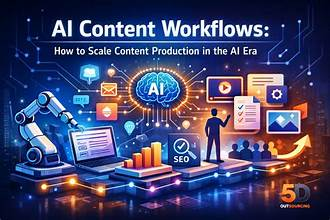
My AI Content Production Framework From Start to Finish
Creating high-quality content consistently has never been easy.
Whether you're writing blog posts, newsletters, social media updates, videos, podcasts, or marketing campaigns, producing valuable content requires time, planning, creativity, research, editing, and optimization.
For many creators, the biggest challenge isn't coming up with great ideas.
It's maintaining consistency.
One week you're full of inspiration.
The next week you're staring at a blank page wondering what to publish.
That inconsistency makes it difficult to grow an audience.
Artificial Intelligence has changed that.
Rather than replacing creativity, AI has helped me build a repeatable content production framework that saves time while maintaining quality.
Instead of wondering what to create next, I follow a structured workflow.
Each stage has a clear purpose.
Each step builds upon the previous one.
The result is a content system that is faster, more organized, and easier to repeat.
In this article, I'll walk you through the framework I use from the first idea all the way to publication.
Whether you're a blogger, entrepreneur, freelancer, marketer, or content creator, you can adapt these principles to fit your own workflow.
Why Systems Beat Motivation
Many people rely on motivation to create content.
The problem is that motivation changes.
Some days you're highly productive.
Other days inspiration disappears.
Professional creators understand something important:
Systems outperform motivation.
A good content system allows you to create consistently even when inspiration is limited.
Instead of asking,
"What should I write today?"
the system already provides the answer.
This removes unnecessary decisions and helps maintain momentum.
AI makes these systems even more effective by reducing repetitive work.
The Biggest Content Creation Mistakes
Before discussing the framework itself, it's worth looking at the mistakes that slow many creators down.
Starting Without a Plan
Many writers immediately begin typing.
Without a clear direction, articles often become disorganized.
Planning first almost always produces stronger content.
Ignoring the Audience
Content isn't created for search engines alone.
It's created for people.
Every article should answer questions, solve problems, or provide useful insights for a clearly defined audience.
Skipping Research
Even experienced writers benefit from research.
Gathering examples, statistics, case studies, and supporting evidence strengthens credibility.
AI accelerates research, but careful verification remains important.
Publishing Without Optimization
Excellent content deserves excellent presentation.
Clear headings, logical structure, readability, SEO optimization, and careful editing all improve the reader's experience.
Step 1: Finding the Right Topic
Everything begins with choosing the right subject.
Rather than writing about whatever comes to mind, I focus on questions people are already asking.
Good content usually sits at the intersection of three areas:
- Audience interest.
- Personal expertise.
- Long-term search demand.
For example, instead of writing generally about Artificial Intelligence, I narrow the topic to something more specific, such as:
- AI for small businesses.
- AI productivity systems.
- Prompt engineering.
- AI marketing.
- AI career development.
- AI automation.
Specific topics tend to attract more targeted readers while improving search visibility.
Using AI for Topic Research
AI helps generate topic ideas remarkably quickly.
Instead of brainstorming alone, I ask AI to identify:
- Frequently asked questions.
- Emerging industry trends.
- Common beginner mistakes.
- Practical "how-to" topics.
- Evergreen content opportunities.
The objective isn't to let AI decide what I write.
Instead, AI expands the number of ideas available for consideration.
I then select the topics that best match my audience.
Step 2: Understanding the Reader
Before writing anything, I ask one simple question:
Who is this article for?
The answer influences everything that follows.
For example:
Beginners require:
- Simple explanations.
- Clear examples.
- Minimal technical language.
Professionals prefer:
- Detailed analysis.
- Industry insights.
- Strategic recommendations.
Business owners often want:
- Practical implementation.
- Productivity improvements.
- Return on investment.
- Competitive advantages.
The clearer the audience, the more useful the final article becomes.

Building a Reader Profile
For every major article, I imagine a typical reader.
I consider questions such as:
- What problem are they trying to solve?
- How much experience do they already have?
- What frustrations do they face?
- What result do they hope to achieve?
- Which examples would resonate most?
This simple exercise keeps the article focused on reader value rather than simply presenting information.
Step 3: Creating the Outline
Only after selecting the topic and understanding the audience do I begin outlining.
The outline acts as the blueprint for the entire article.
Instead of writing randomly, I organize ideas into logical sections.
A typical outline includes:
Introduction.
Main concepts.
Supporting examples.
Practical recommendations.
Common mistakes.
Frequently asked questions.
Key takeaways.
Conclusion.
Once the outline is complete, writing becomes significantly easier.
AI as an Outline Partner
One of my favorite AI workflows is collaborative outlining.
Rather than asking AI to write the entire article immediately, I ask it to suggest possible structures.
For example:
"What sections should this guide include?"
"Which questions will readers expect answered?"
"What logical order should the information follow?"
AI frequently suggests perspectives I may not have considered.
I combine those ideas with my own experience to produce a stronger outline.
Why I Never Skip the Outline
It can be tempting to begin writing immediately.
However, spending fifteen or twenty minutes creating a detailed outline often saves hours later.
A good outline:
- Prevents repetition.
- Improves organization.
- Highlights missing ideas.
- Creates smoother transitions.
- Makes collaboration with AI much easier.
Think of it as creating the map before beginning the journey.
Organizing Information Before Writing
Once the outline is complete, I gather supporting material.
This might include:
- Notes.
- Research findings.
- Examples.
- Personal experiences.
- Case studies.
- Statistics.
- Useful analogies.
Keeping everything organized before writing reduces interruptions later.
Instead of constantly stopping to search for information, I already have the resources available.
Quality Begins Before the First Word
Many people believe quality comes from excellent writing.
In reality, much of the quality is determined before writing even begins.
Choosing the right topic.
Understanding the audience.
Planning the structure.
Gathering useful information.
These preparation steps make the drafting process smoother while improving the final result.
AI accelerates each of these stages without replacing thoughtful planning.
My Core Principle
Over time, one principle has shaped my entire content workflow:
AI should accelerate the process—not replace the thinking.
The ideas remain mine.
The strategy remains mine.
The audience remains my responsibility.
AI simply helps organize information, explore possibilities, improve efficiency, and reduce repetitive work.
That distinction has dramatically improved both the speed and quality of my content production.
My AI Content Production Framework From Start to Finish
The Complete AI Content System I Use to Plan, Write, Optimize, and Publish High-Quality Content Faster
Platform: Beehiiv
Category: AI • Content System • Content Marketing • Productivity
Target Length: ~2,800 Words
Primary SEO Keyword: My AI Content Production Framework From Start to Finish
Part 2
Step 4: Writing the First Draft
Once my research, audience profile, and outline are complete, it's time to create the first draft.
This is where AI provides one of the biggest productivity gains.
Instead of staring at a blank page wondering how to begin, I use AI to transform my outline into a structured first draft.
However, I don't ask AI to write everything in one prompt.
Instead, I work section by section.
For example:
- Introduction
- Problem statement
- Main sections
- Practical examples
- Key takeaways
- Frequently Asked Questions
- Conclusion
Breaking the article into manageable parts allows me to review each section carefully before moving on.
The result is a stronger article with fewer mistakes and a more consistent flow.
Treat AI Like a Writing Partner
One of the biggest mindset shifts I've made is viewing AI as a collaborator rather than a replacement.
Instead of saying:
"Write the entire article."
I ask AI to help me solve one writing challenge at a time.
For example:
- Improve this introduction.
- Rewrite this paragraph more clearly.
- Expand this section with practical examples.
- Suggest a stronger conclusion.
- Make this explanation easier for beginners.
This collaborative approach keeps my voice intact while benefiting from AI's speed and organizational abilities.
Writing One Section at a Time
Long-form content becomes much easier when divided into smaller sections.
For example, a 2,800-word article might be divided into:
- 300-word introduction.
- Five or six main sections.
- Practical examples.
- Frequently Asked Questions.
- Final summary.
Completing one section at a time creates steady progress.
It also allows me to maintain focus without feeling overwhelmed.
Step 5: Optimizing for SEO
Publishing great content isn't enough.
People also need to find it.
That's why search engine optimization (SEO) is part of my content workflow from the beginning—not something I add at the end.
Before publishing, I review:
Primary Keyword
Every article focuses on one clear keyword.
For this article, it's:
My AI Content Production Framework From Start to Finish
Keeping a clear primary keyword helps search engines understand the article's topic.
Secondary Keywords
I also naturally include related phrases such as:
- AI content workflow
- AI writing system
- AI content strategy
- AI productivity
- AI blogging
- Content automation
- AI content marketing
- Artificial Intelligence writing
Using related keywords improves topical relevance without making the article feel repetitive.
Clear Headings
Readers usually scan before they read.
Descriptive headings improve readability while helping search engines understand the article's structure.
Each heading should clearly explain what the following section contains.
Readability
I always ask:
Can someone quickly understand this paragraph?
Short paragraphs.
Simple language.
Logical progression.
Smooth transitions.
These improvements benefit both readers and search engines.
Step 6: Editing the Draft
The first draft is never the final version.
Editing is where the article truly improves.
I usually perform several editing passes.
First Pass: Structure
I check:
- Does the article flow logically?
- Are ideas presented in the right order?
- Is anything missing?
Second Pass: Clarity
I simplify complex explanations.
Remove unnecessary repetition.
Improve transitions.
Replace awkward wording.
Strengthen examples.
Third Pass: Engagement
I ask:
Would I enjoy reading this?
If a section feels boring, I improve it.
Sometimes adding:
- A story.
- A practical example.
- A comparison.
- A question.
- A useful analogy.
can dramatically improve engagement.
Fact-Checking Matters
AI is an excellent writing assistant.
However, it is not a substitute for verification.
Whenever articles include:
- Statistics.
- Research.
- Legal information.
- Financial information.
- Medical information.
- Technical specifications.
I verify those details using reliable sources.
Accuracy builds trust.
Readers appreciate content they can confidently rely upon.
Step 7: Adding Personality
One reason many AI-generated articles sound similar is that they lack human perspective.
I deliberately include:
- Personal observations.
- Lessons learned.
- Practical experiences.
- Real-world examples.
- Original opinions.
- Actionable recommendations.
These additions make the content more authentic.
Readers connect with people—not algorithms.
Formatting for Better Reading
Online readers rarely consume articles word by word.
They scan.
That's why formatting is essential.
I use:
- Clear headings.
- Bullet points.
- Numbered lists.
- Short paragraphs.
- Bold emphasis where appropriate.
- Plenty of white space.
Good formatting keeps readers engaged from beginning to end.
Preparing Content for Multiple Platforms
One article rarely stays in one place.
A single long-form article can often become:
- A Beehiiv newsletter.
- A Medium article.
- A LinkedIn post.
- Several X (Twitter) threads.
- Multiple Facebook posts.
- Instagram captions.
- Short-form videos.
- Podcast talking points.
- Email newsletters.
- Website blog content.
Repurposing dramatically increases the return on every piece of content created.
My Editing Checklist
Before publishing, I ask myself:
✅ Does the headline attract attention?
✅ Does the introduction encourage readers to continue?
✅ Is every section useful?
✅ Are examples practical?
✅ Are keywords included naturally?
✅ Is the article easy to scan?
✅ Have I removed unnecessary repetition?
✅ Have I verified important facts?
✅ Does the conclusion leave readers with clear next steps?
Only after answering "yes" to each question do I consider the article ready for publication.
Why Human Editing Still Matters
Artificial Intelligence can write remarkably well.
But human editing remains essential.
Humans understand:
- Emotion.
- Brand voice.
- Audience expectations.
- Humor.
- Storytelling.
- Cultural context.
- Strategic messaging.
AI generates content.
Humans create connection.
That combination produces the strongest results.
Continuous Improvement
Every published article becomes part of a larger learning process.
I review:
- Which articles performed best?
- Which headlines attracted more readers?
- Which topics generated discussion?
- Which content received shares?
- Which sections kept readers engaged?
Those insights improve the next article.
Over time, the content system becomes stronger through continuous refinement rather than dramatic changes.
Step 8: Publishing with a Purpose
After planning, writing, optimizing, editing, and reviewing the article, the next step is publishing.
Many creators think publishing marks the end of the content creation process.
In reality, it's the beginning.
Publishing should follow a consistent system rather than happen randomly.
Before every article goes live, I review a simple checklist:
- Is the title compelling?
- Does the introduction capture attention?
- Are all headings easy to understand?
- Has the article been proofread?
- Is the primary SEO keyword naturally included?
- Have internal and external links been added where appropriate?
- Is the formatting easy to read on desktop and mobile?
Taking a few extra minutes before publishing helps create a better experience for readers.
Publishing Consistently Matters More Than Publishing Perfectly
One lesson I've learned over time is that consistency usually beats perfection.
Many creators delay publishing because they believe every article must be flawless.
Perfection often becomes procrastination.
Instead, I aim for:
- High quality.
- Practical value.
- Accuracy.
- Consistency.
Publishing useful content regularly builds trust far more effectively than publishing a "perfect" article once every few months.
Repurposing One Article into Multiple Content Assets
One of the most valuable parts of my AI content framework is repurposing.
Every long-form article contains dozens of smaller content opportunities.
For example, a single 2,800-word article can become:
Newsletter
The original Beehiiv article.
Medium Article
Expanded or adapted for a different audience.
LinkedIn Posts
Several professional insights.
X (Twitter) Threads
A series of concise, educational posts.
Facebook Posts
Short discussions focused on practical advice.
Instagram Carousel
Key lessons transformed into visual slides.
Short Videos
One-minute explanations for platforms such as YouTube Shorts or TikTok.
Podcast Notes
The article outline becomes a discussion guide.
Email Campaign
Important sections become educational email sequences.
Repurposing dramatically increases the return on the time invested in creating each article.
Building a Content Library
Every published article becomes part of a growing knowledge library.
Instead of constantly starting from zero, older articles provide:
- Ideas for future topics.
- Internal links.
- Supporting examples.
- Updated versions.
- Related newsletters.
- Downloadable resources.
Over time, your content begins working together as a connected ecosystem.
Readers consume multiple articles rather than only one.
Using AI to Maintain Consistency
Consistency isn't only about publishing regularly.
It's also about maintaining quality.
AI helps me remain consistent by assisting with:
- Headlines.
- Introductions.
- Article structure.
- SEO optimization.
- Formatting.
- Summaries.
- Social media captions.
- Newsletter previews.
This creates a recognizable style across different platforms while reducing repetitive work.
Automating Repetitive Tasks
Many content creators spend unnecessary time on administrative work.
Examples include:
- Renaming files.
- Formatting documents.
- Scheduling posts.
- Creating excerpts.
- Writing meta descriptions.
- Organizing research.
- Updating spreadsheets.
- Managing editorial calendars.
Automation tools can reduce much of this repetitive work.
The goal is not to automate creativity.
The goal is to automate administration.
Measuring What Actually Matters
Publishing content is only one part of the process.
Reviewing performance helps improve future articles.
Instead of focusing only on page views, I also monitor:
- Reader engagement.
- Reading time.
- Subscriber growth.
- Email open rates.
- Click-through rates.
- Comments.
- Shares.
- Audience feedback.
These metrics provide valuable insights into what readers truly find useful.
Common Mistakes Content Creators Make
Over time, I've noticed several recurring mistakes.
Publishing Without a Strategy
Random articles rarely build a loyal audience.
Every article should support a broader content strategy.
Chasing Every Trend
Trending topics can generate traffic, but evergreen content continues attracting readers long after publication.
A balanced content strategy includes both.
Overusing AI
AI accelerates writing.
It should not replace original thinking.
Readers appreciate authentic experiences, unique insights, and practical expertise.
Ignoring SEO
Excellent content deserves visibility.
Basic SEO practices help people discover your work through search engines.
Giving Up Too Early
Many successful newsletters grow gradually.
Consistency over months often matters more than dramatic short-term growth.
Building an audience requires patience.
The Future of AI Content Systems
Artificial Intelligence continues improving rapidly.
Future AI systems are likely to:
- Generate better first drafts.
- Understand audience preferences more accurately.
- Integrate directly with publishing platforms.
- Assist with multimedia content creation.
- Provide deeper SEO recommendations.
- Personalize content workflows.
Despite these advances, one principle will remain unchanged.
Human expertise creates value.
AI amplifies that expertise.
The strongest content will continue combining human creativity with intelligent technology.
My Biggest Lesson
After experimenting with AI across countless writing projects, one lesson stands out above all others:
A structured system always outperforms random effort.
AI is incredibly powerful.
But its greatest strength is helping organized creators become even more productive.
Without a workflow, AI becomes another tool.
With a workflow, AI becomes a force multiplier.
The framework doesn't need to be complicated.
It simply needs to be repeatable.
When every article follows a clear process—from idea to publication—you spend less time wondering what to do next and more time creating meaningful content.
Final Thoughts
Artificial Intelligence has transformed the way content can be created.
Instead of replacing writers, marketers, educators, entrepreneurs, and creators, it provides new ways to work faster, think more strategically, and maintain consistent quality.
The framework I've shared isn't the only way to create content.
It's simply a practical system that combines planning, research, writing, SEO, editing, publishing, and repurposing into one repeatable workflow.
The real advantage doesn't come from AI alone.
It comes from combining thoughtful systems with intelligent technology.
Every article you publish teaches you something.
Every workflow improvement saves time.
Every new skill compounds over the months and years ahead.
The creators who thrive won't necessarily be those with the most advanced AI tools.
They'll be the ones who develop reliable systems, continue learning, and consistently deliver value to their audience.
Build the system once.
Improve it continuously.
Let AI help you scale it.
Key Takeaways
- A repeatable content production framework is more effective than relying on inspiration alone.
- AI is most valuable during planning, research, outlining, drafting, editing, SEO optimization, and repurposing.
- Understanding your audience before writing leads to stronger, more relevant content.
- Repurposing one long-form article into multiple formats significantly increases content output.
- Human creativity, expertise, and editorial judgment remain essential even when using AI.
- Measuring engagement and learning from each publication helps improve future content.
- Consistency, quality, and continuous improvement are the foundations of long-term content success.
Frequently Asked Questions (FAQ)
Can AI create an entire article without human involvement?
AI can generate complete drafts, but the strongest content usually includes human editing, fact-checking, personal experience, and strategic insights to ensure quality and originality.
How long does this content production framework take?
The exact time depends on the topic and level of research. As your workflow improves and you become more familiar with AI tools, the process typically becomes faster while maintaining quality.
Should I use the same workflow for every platform?
The core workflow can remain the same, but each platform has different audiences and formatting requirements. Adapting content for each platform generally produces better engagement.
Is SEO still important when using AI?
Yes. AI helps create content efficiently, but SEO remains essential for helping readers discover your articles through search engines. Combining AI with sound SEO practices improves long-term visibility.
What is the most important part of the framework?
Planning. A well-defined topic, a clear understanding of your audience, and a strong outline make every later stage—writing, editing, optimization, and publishing—more effective.
Thank You for Reading!
Thank you for reading this edition of the newsletter.
I hope this behind-the-scenes look at my AI content production framework has given you practical ideas you can immediately apply to your own writing process.
If you found this article valuable:
- Subscribe for weekly insights on AI, content creation, SEO, and productivity.
- Share this article with creators, entrepreneurs, marketers, or anyone building an online audience.
- Leave a comment and tell me which part of your content workflow takes the most time—I may cover solutions in a future newsletter.
- Watch for the next Beehiiv edition, where I'll break down another practical AI workflow designed to help you create better content, grow your audience, and work more efficiently.
Every week, I'll continue sharing actionable systems, prompt engineering strategies, AI workflows, and content marketing insights to help you stay ahead in the rapidly evolving world of artificial intelligence.
See you in the next newsletter!
Want More In-Depth AI, Technology, and Future Innovation Insights?
If you enjoyed this article and would like access to more exclusive content covering artificial intelligence, psychology, technology, digital transformation, business innovation, entrepreneurship, data science, and the future of work, join my communities on the platforms below. I regularly publish premium articles, expert analysis, research, practical guides, and exclusive content designed to help readers stay ahead in the rapidly evolving world of AI and emerging technologies.
📖 Follow Me on Ghost
Read my latest articles on Artificial Intelligence, Data Science, Business, Technology, Innovation, and Digital Transformation. 👉 Ghost:
https://global-ai-intelligence.ghost.io/ghost/#/site
📩 Subscribe on Substack
Receive exclusive newsletters, premium long-form articles, industry insights, AI trends, and subscriber-only content delivered directly to your inbox. 👉 Substack:
https://substack.com/@mrscallimi
⭐ Become a Patreon Member
Support independent research and gain access to exclusive articles, early releases, premium content, behind-the-scenes updates, and future AI reports. 👉 Patreon:
https://patreon.com/GlobalAIIntelligence2026?utm_medium=unknown&utm_source=join_link&utm_campaign=creatorshare_creator&utm_content=copyLink
Subscribe on Substack
Receive exclusive newsletters, premium long-form articles, industry insights, AI trends, and subscriber-only content delivered directly to your inbox. 👉 Substack:
https://substack.com/@mrscallimi 👉 Medium :https://medium.com/@sam_ne4
Stay Ahead of the AI Revolution
The world is changing faster than ever. By joining these communities, you'll gain valuable insights into:
- 🤖 Artificial Intelligence
- 🧠 Psychology and Human Behavior
- 📊 Data Science & Analytics
- 💼 Business & Entrepreneurship
- 💻 Digital Transformation
- 🚀 Emerging Technologies
- 📈 Future Careers & Skills
- 🔬 AI Research & Innovation
- 🌍 Global Technology Trends
Thank you for reading and for supporting independent research. Together, we can better understand the technologies shaping our future.
--———————————